
Shower & tile refinishing
Changing the color of a bathroom without removing a single tile.
Shower surrounds, tile walls, grout lines and the tub they sit above. We repair what's broken, then coat the whole wall in one color — so the grout stops being the part that looks dirty.
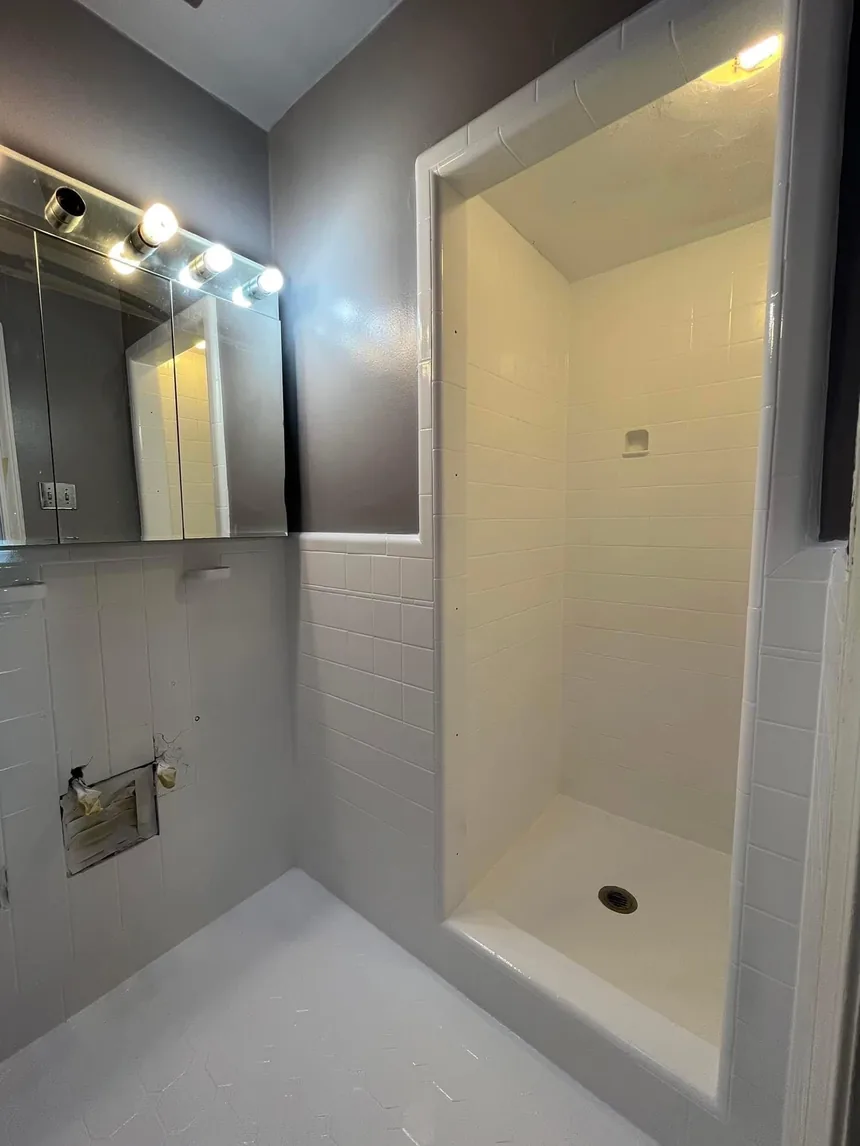
Broken tile gets rebuilt, not painted over
The same wall, photographed as we went. Scroll across.
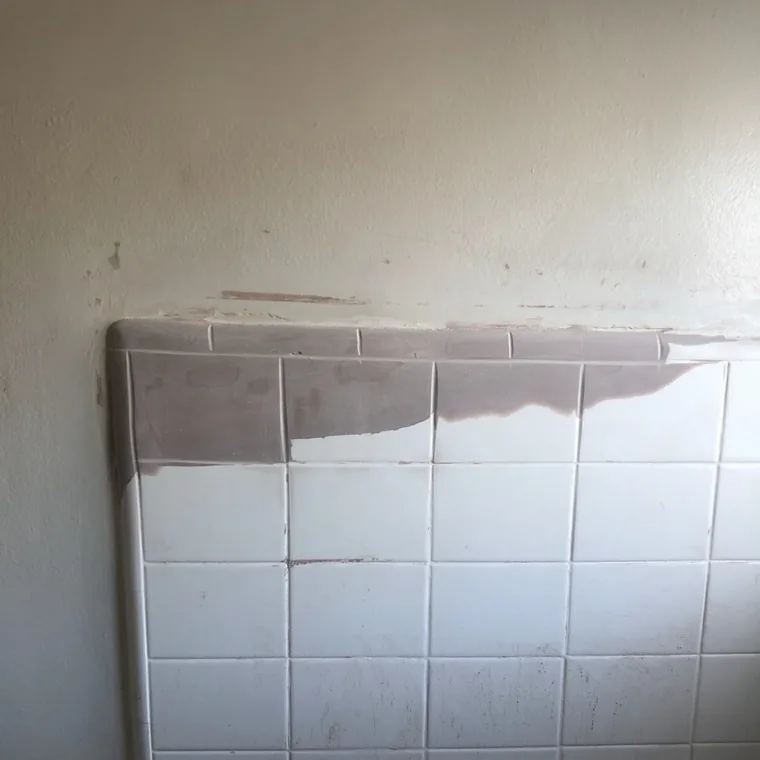
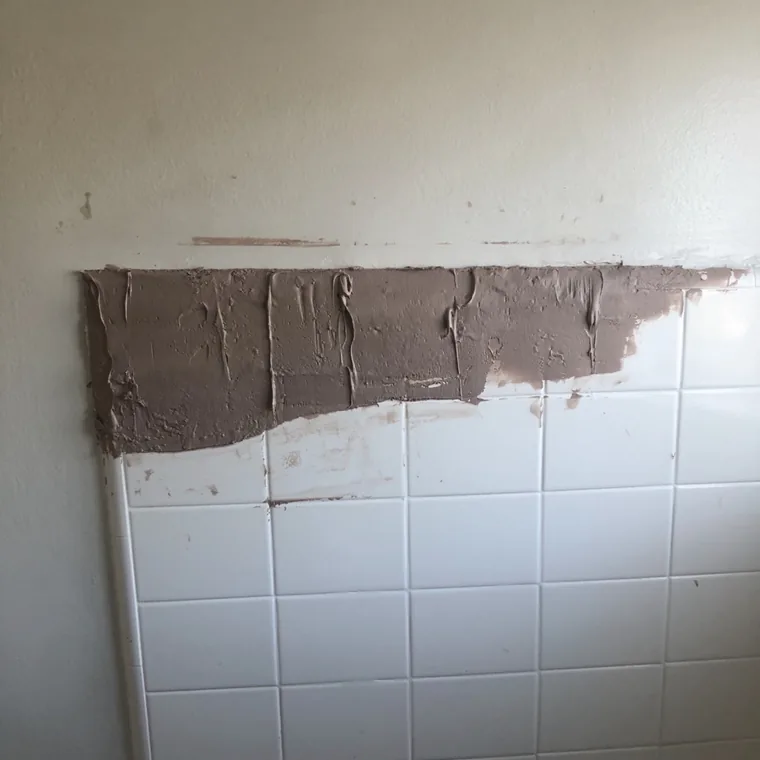
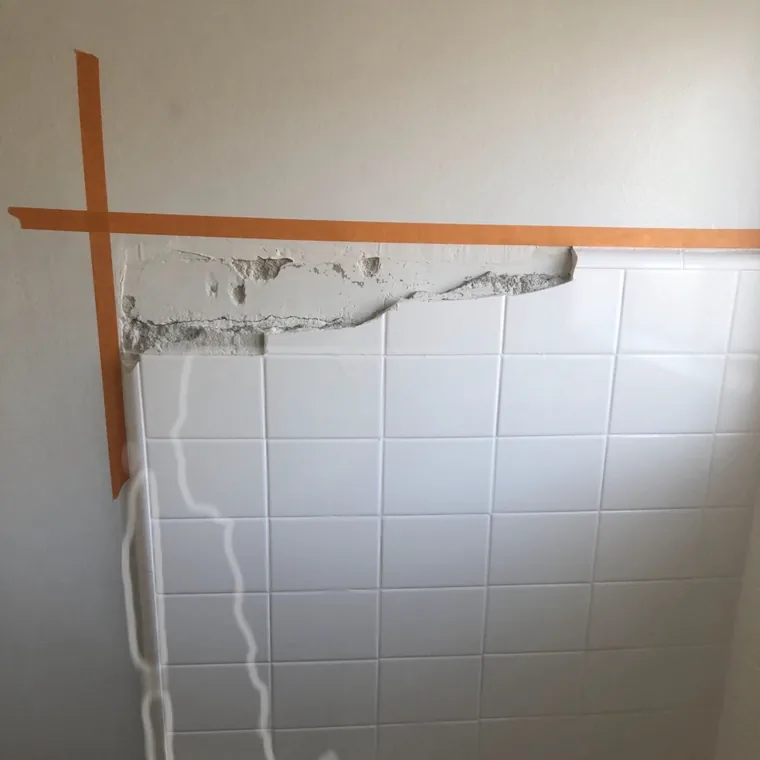
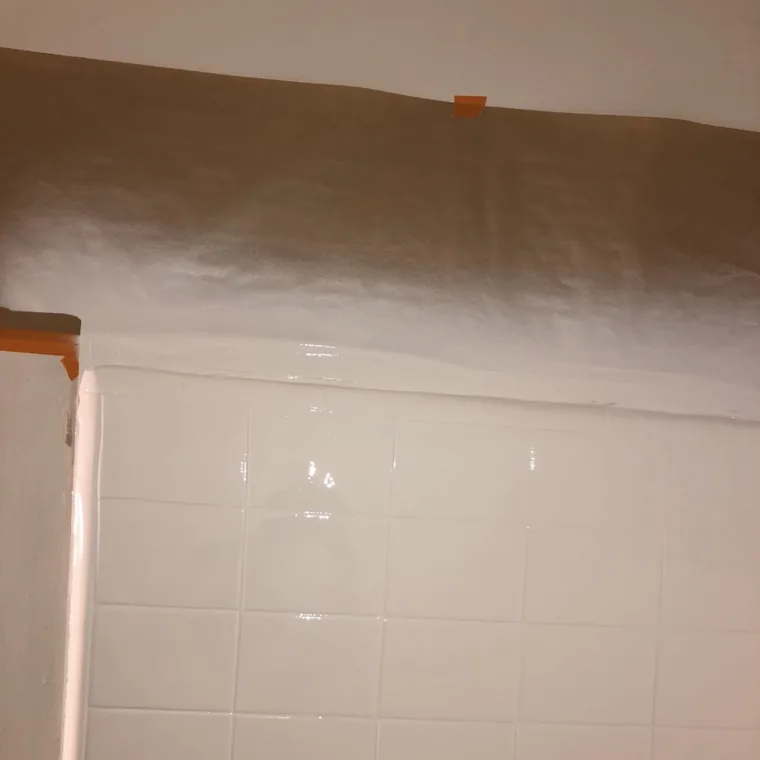
Skip the repair and the new finish follows the old damage. That's why a cheap job looks wrong within a month.
Regrout it, or refinish it?
If the tile itself is in good shape and it's only the grout that has gone dark, regrouting is the cheaper answer and we'll tell you so.
Refinishing is the right call when the problem is bigger than the grout lines:
- The tile color is the problem. Pink, avocado, almond, sand — the tile is fine, it's just from another decade.
- The glaze has worn off. Once tile goes matte it holds dirt, and no amount of cleaning brings the shine back.
- The grout keeps going dark again. Regrouting buys time. Coating the wall as one surface means there are no grout lines left to stain.
- Tiles are chipped or missing. These get rebuilt first, as in the photos above.
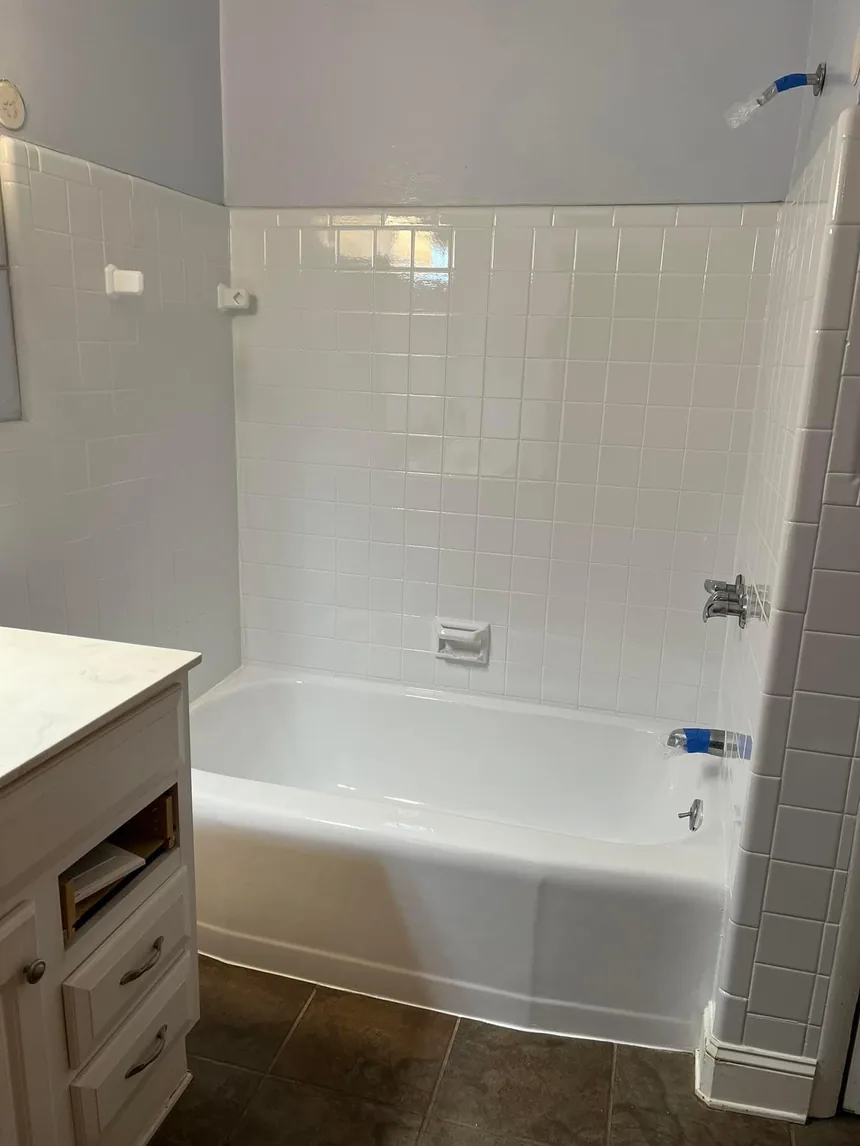
One thing worth knowing: after refinishing, the wall reads as a single surface. You still see the tile grid — the lines are still there in the shape of the wall — but they're the same color and the same finish as everything around them.
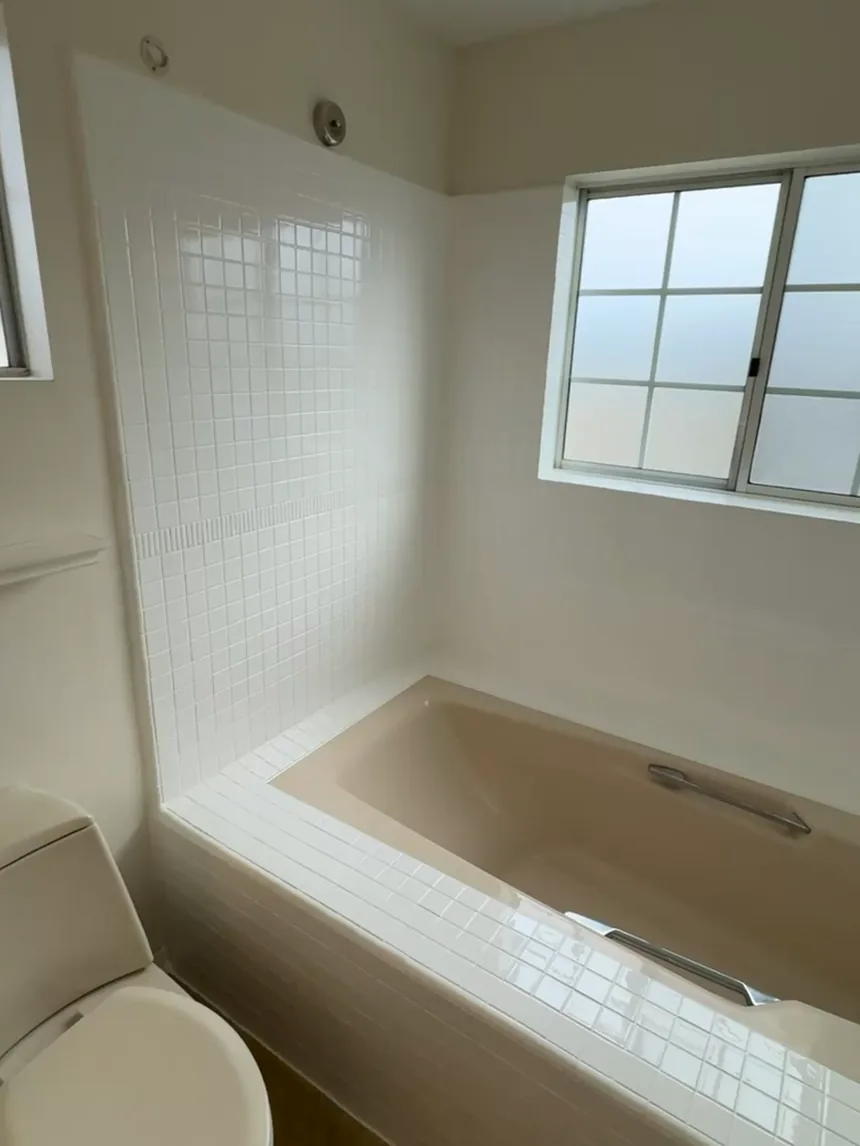
A pink bathroom stops being a pink bathroom
This is the reason most people call about tile. The layout works, the plumbing works, the tile is sound — and the room still looks forty years old because of the color.
Tearing that tile out means the wall behind it, the debris, and a bathroom you can't use. Refinishing it changes the color and leaves the wall where it is.
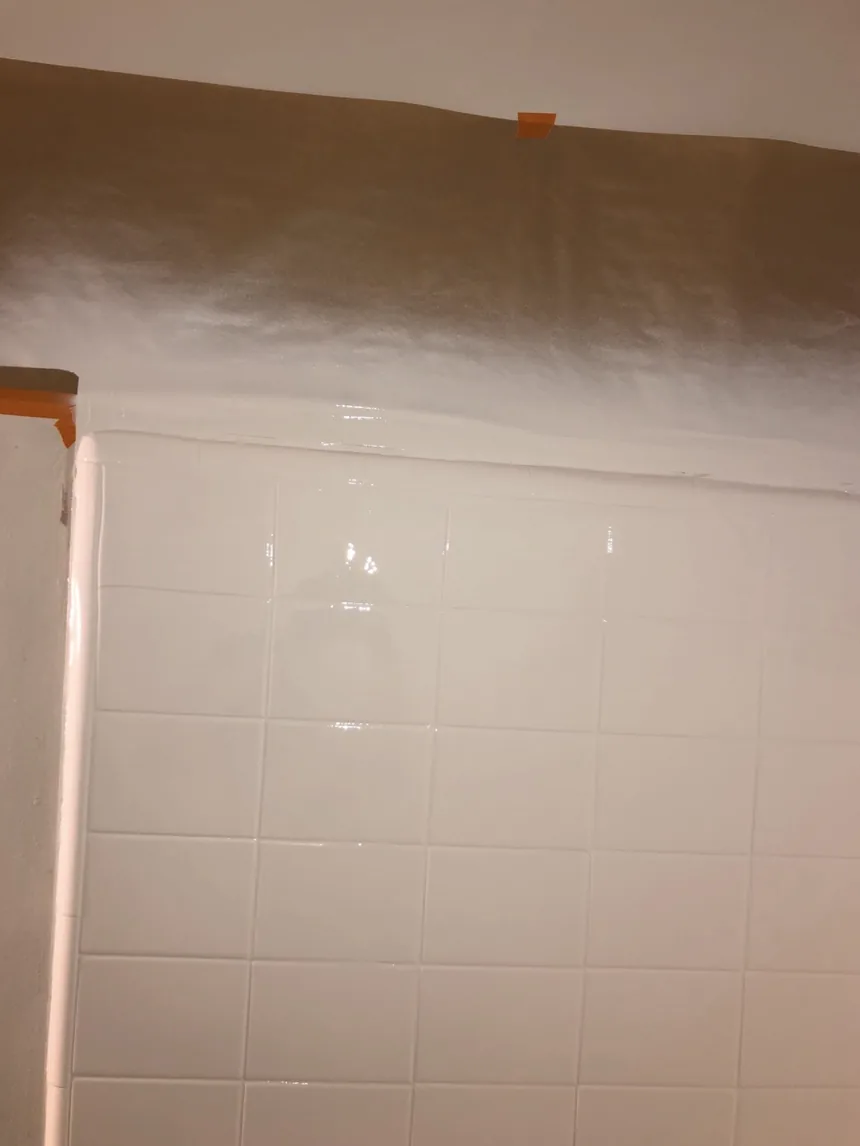
The grout stops being the dirty part
Grout is porous, and in a shower it never really gets the chance to dry out. That's why it darkens back within weeks of being cleaned, and why scrubbing harder only wears it away faster.
Coating the wall covers the tile and the grout in the same pass. There's no absorbent line left between the tiles for anything to soak into.
What a new finish won't fix
Tile hides things. Before we quote a wall, we check for the problems that a coating would only cover up:
- Water getting in behind the tile If the wall behind is soft or the tile sounds hollow, that's a repair job before it's a finish job.
- Mold that's coming from a leak Surface mold cleans off. Mold fed by a leak comes straight back through.
- Tiles that move when you press them Loose tile has to be re-set first, or the finish cracks along the joint.
- A shower pan that's failing The pan is a waterproofing layer, not a surface. Coating it doesn't make it watertight.
Tub and surround, done in one go
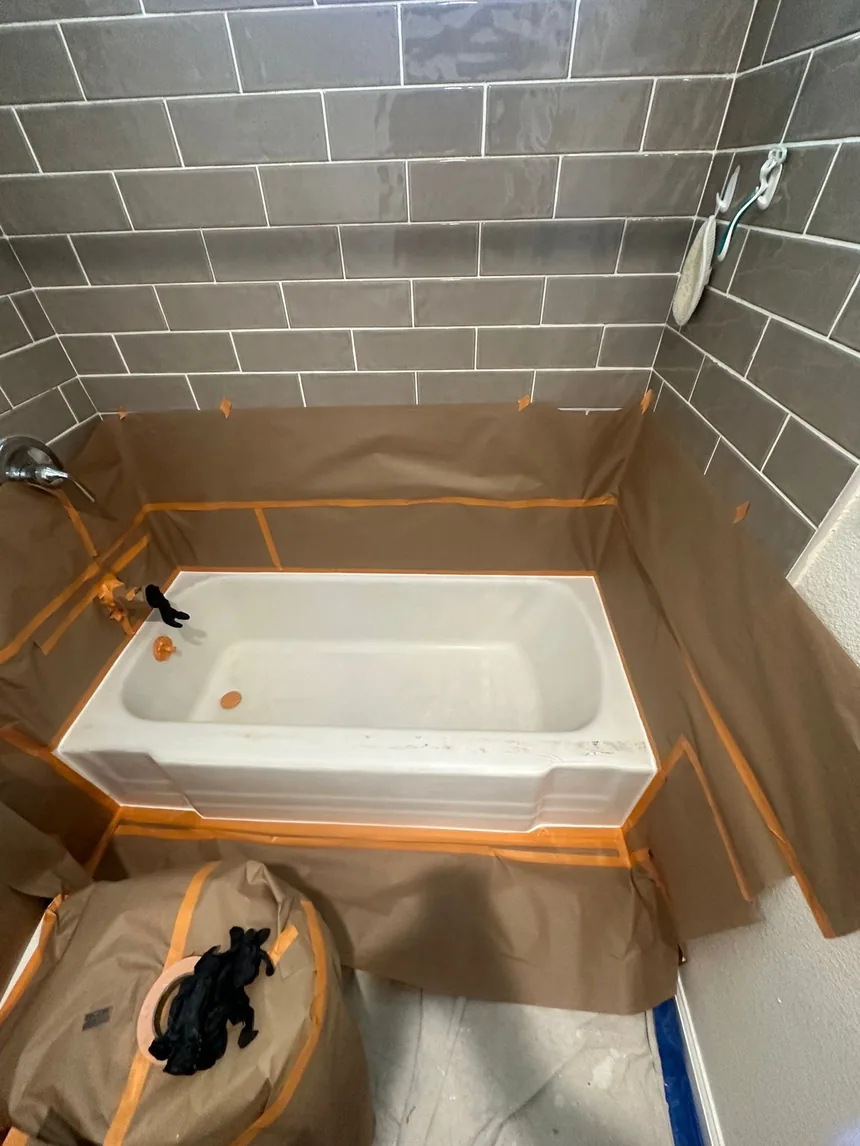
If the tub is being refinished anyway, the wall above it is the cheapest thing you'll ever add to a job.
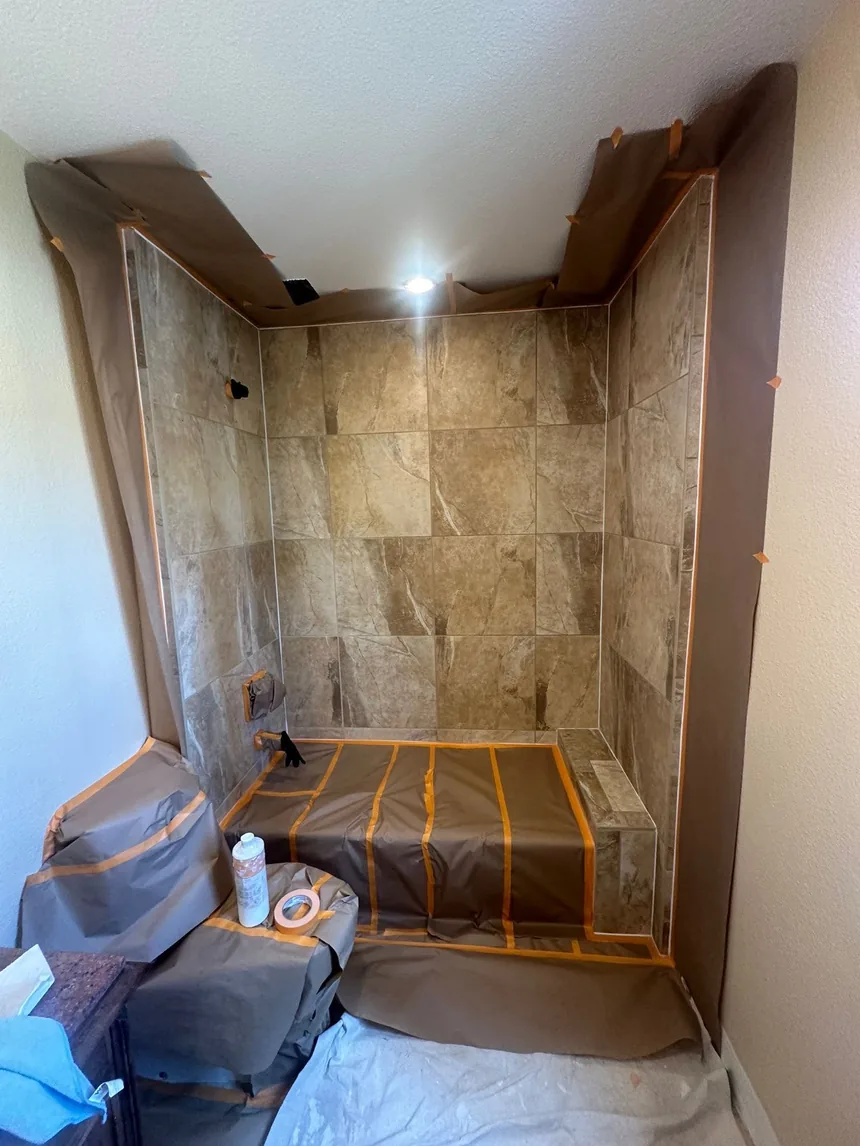 Before
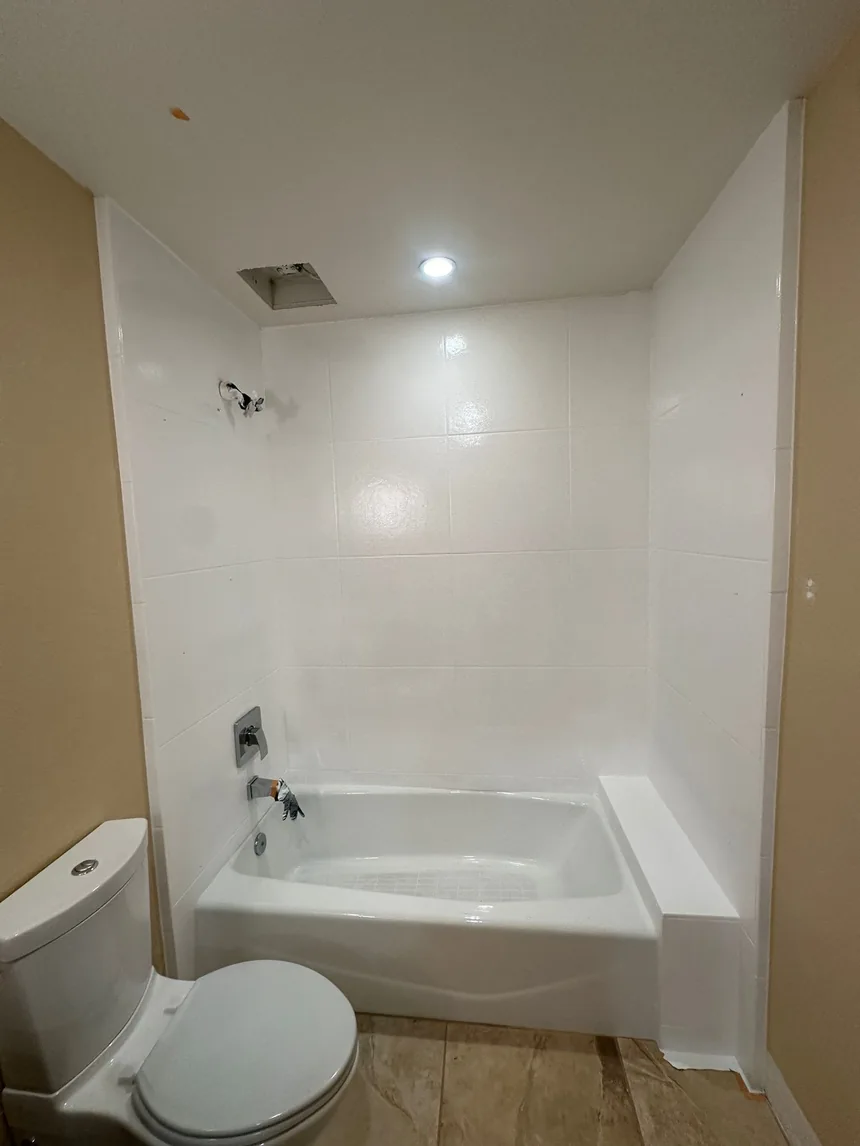 After
After
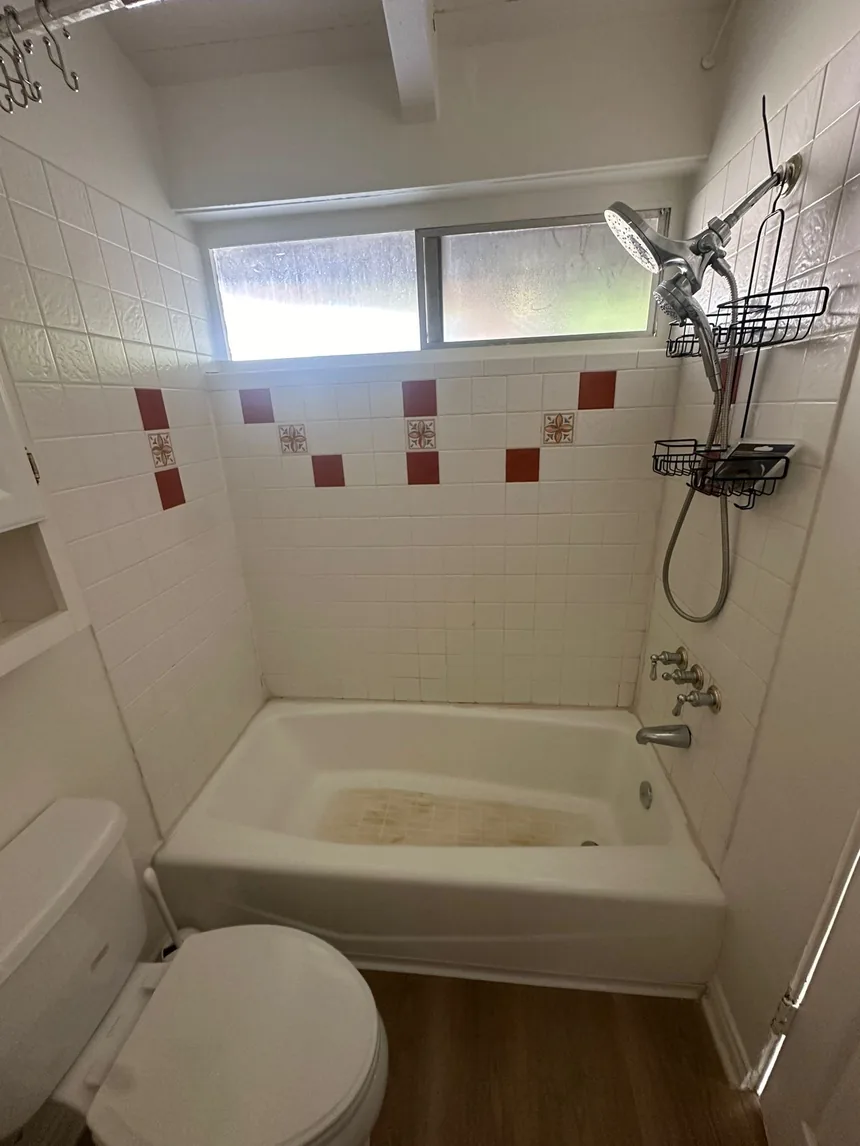 Before
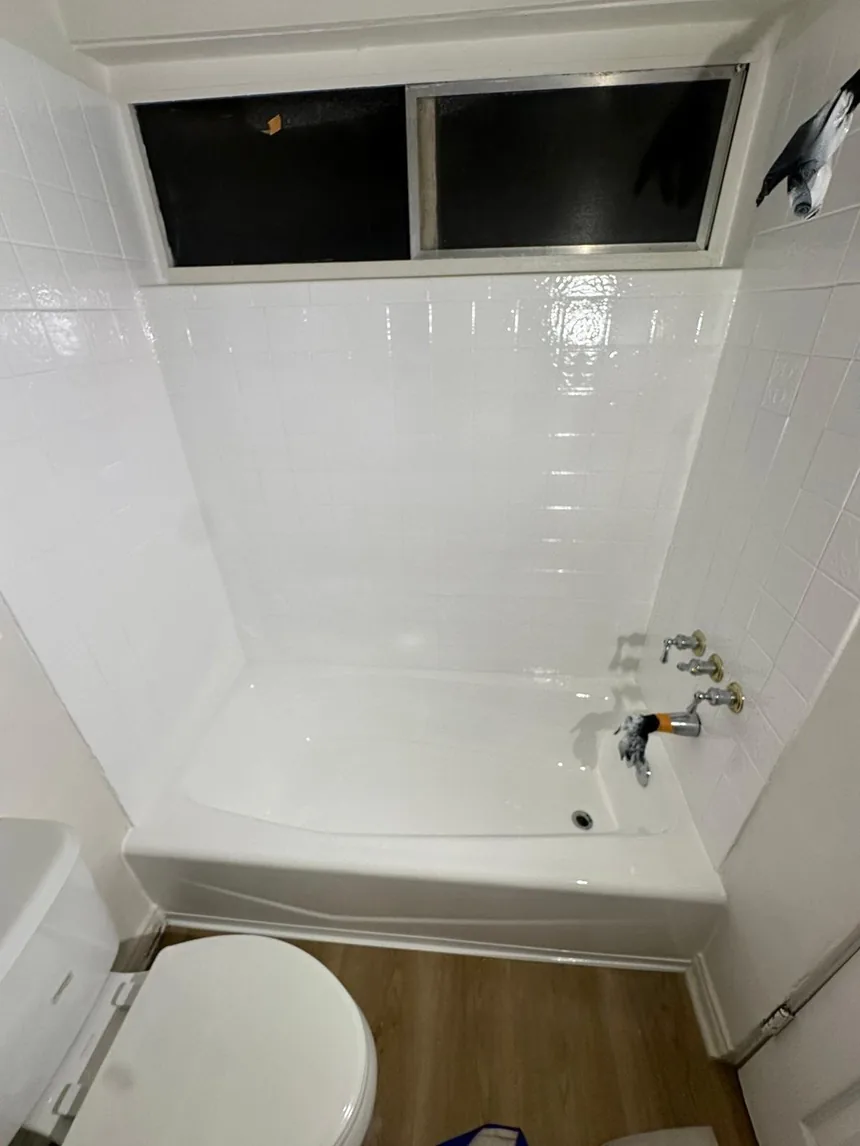 After
After
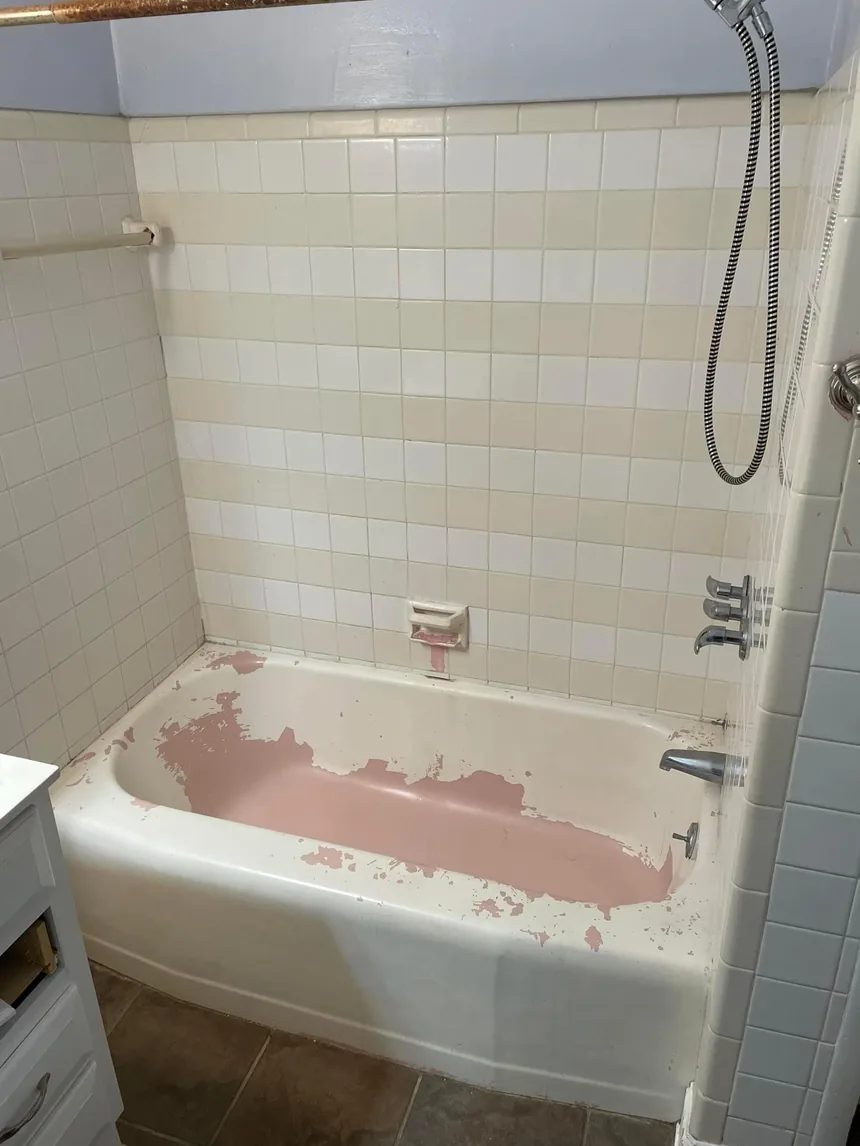 Before
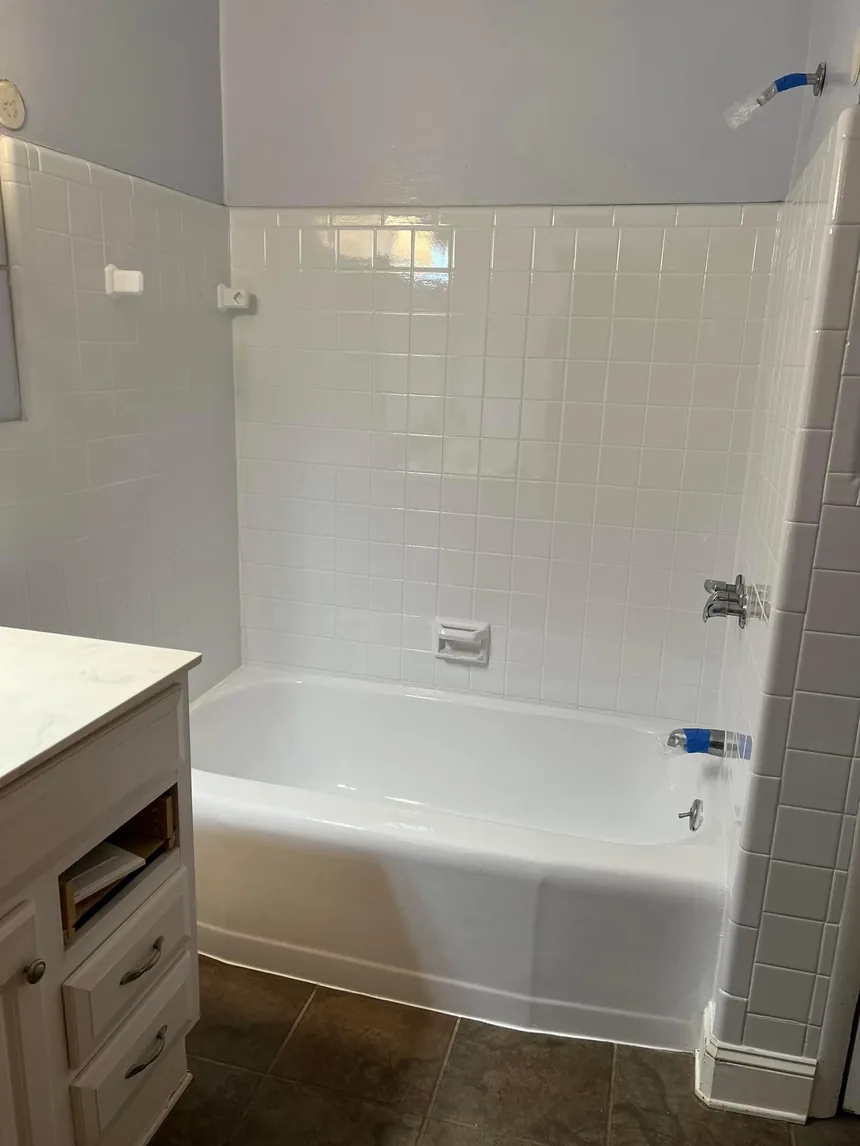 After
After
What people ask about tile
Will I still be able to see the grout lines?
You'll still see the grid — the lines are physically there in the wall. What changes is that they're the same color and the same finish as the tile, so they stop reading as the dirty part.
Can you do just the wall, not the tub?
Yes. Most people do both together because the bathroom is already masked off and the work is in the same room, but the wall on its own is a normal job.
What about a tile countertop or a tiled tub deck?
Same job, same surface. We refinish tile counters and tub decks — there's more about those on the sinks and countertops page.
A few of my tiles are cracked. Do I need to replace them first?
No. Chipped and missing tile gets filled and leveled as part of the job — that's the repair in the photos at the top of this page. Tiles that are loose or moving are a different problem, and we'll tell you if that's what we find.
How long before I can use the shower?
24 hours from when we finish. The work itself is 3–5 hours and it's a single visit, tub and walls together — doing the walls on a separate day means masking the room twice and paying for it twice. Here's what decides the price of a refinishing job.
Can I pick a color other than white?
Yes. White is the most common, then bone and gray, and we can match a color that's already in the room.
How do I clean it afterward?
A non-abrasive cleaner and a soft cloth. No scouring powder and no abrasive pads — the surface is smooth and non-porous, so it doesn't need them, and they'll dull it over time.
Get a free estimate
Tell us your name and number and we'll get back to you with a price. No obligation, no pressure.
Rather just call? (424) 308-4060