
Comparison · 8 min read
Bathtub liners vs refinishing: what nobody tells you about liners
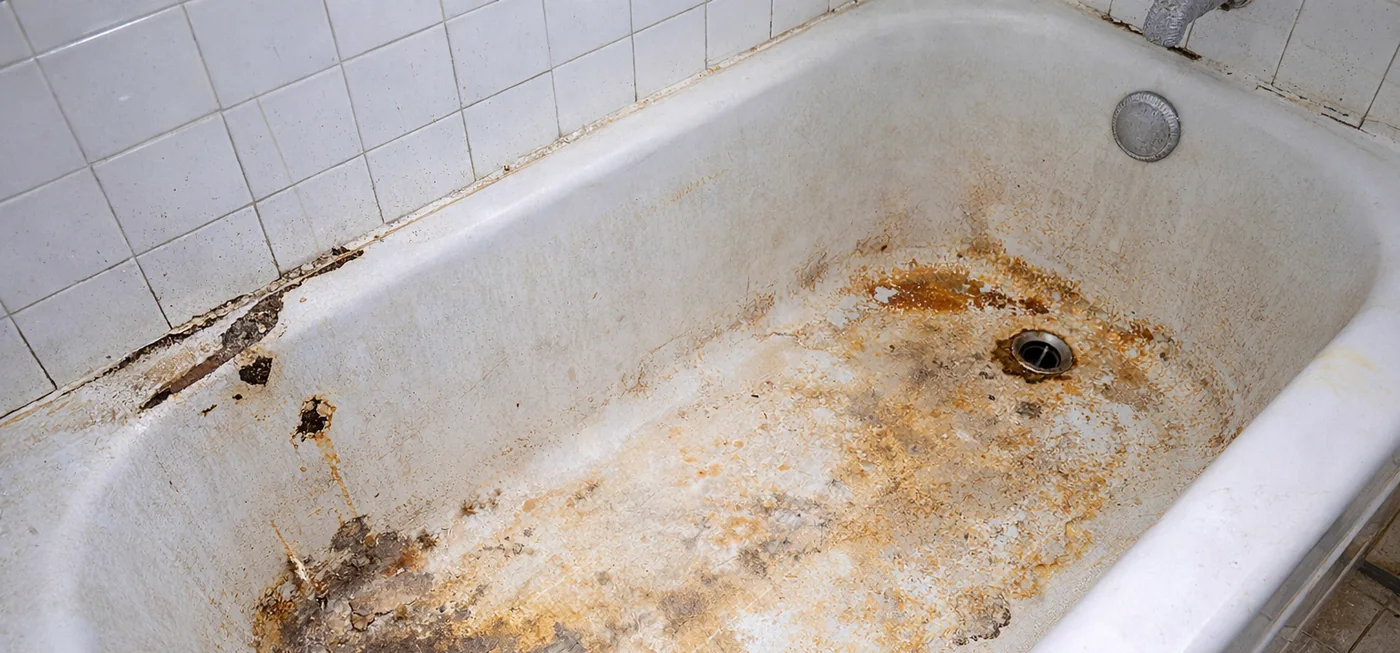 Before
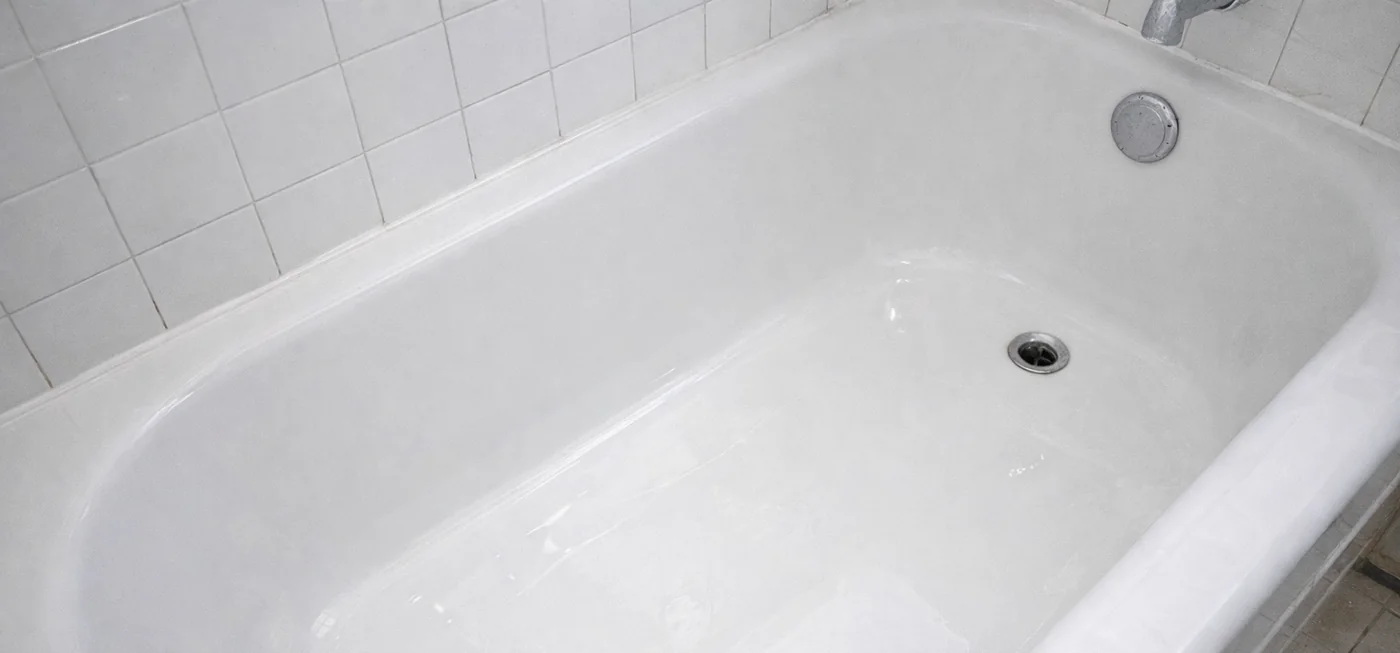 After
After
If you've been researching what to do about a worn bathtub, you've probably run into bathtub liners — an acrylic or PVC shell, molded to the shape of your tub, fitted inside it and sealed around the edges. They're marketed as a one-day, no-demolition alternative to replacement, which is exactly how refinishing is marketed too.
They are not the same thing, and the difference matters a great deal in year three.
What a liner actually is
A liner is a second tub. It's manufactured to fit over an existing tub of a standard size, glued and sealed in place, and the old tub stays underneath it forever.
Refinishing, by contrast, doesn't add a tub. It repairs the surface of the one you own and puts a new finish directly onto it. There's nothing between the finish and the tub, because the finish is bonded to the tub.
One approach covers the problem. The other resurfaces it. That single difference produces most of what follows.
The gap is the problem
No liner fits perfectly, because it isn't molded to your specific tub — it's molded to a standard size that your tub is close to. That leaves a cavity between the liner and the original tub, however small.
As long as the seal around the top edge and the drain is perfect, that cavity stays dry. Seals are not perfect forever. They're subjected to hot water, weight, expansion and contraction, and cleaning products, every single day.
Once water finds its way in, it has nowhere to go. It sits in a warm, dark, enclosed space between two pieces of plastic and metal. What happens next is predictable:
- Standing water and smell. You may hear it before you see it — a slight sloshing or a hollow sound underfoot.
- Mold in a place you cannot reach. You can't clean a cavity you can't open.
- The liner starts to flex. It was supported by sitting snugly on the tub. Water and lost adhesion change that.
- The original tub keeps corroding underneath, quietly, in the damp.
The part that catches people out: removal
If a refinish fails, it gets stripped and redone. That's a straightforward job, and any competent refinisher does it routinely.
If a liner fails, you have to get the liner out. It's bonded in with strong adhesive, sealed at the edges, and in many cases it has to be cut out in pieces. Underneath it you'll find the original tub in whatever condition it's been kept in — which is often worse than when the liner went in, because it has spent years damp.
That's the trap. A liner doesn't just fail — it can leave you with a worse starting position than the one you were trying to fix.
What about the walls?
Liners are usually sold alongside acrylic wall surrounds, because the liner's top edge has to be covered by something. That means the tile you already have gets covered too — permanently, and with the same cavity problem behind it.
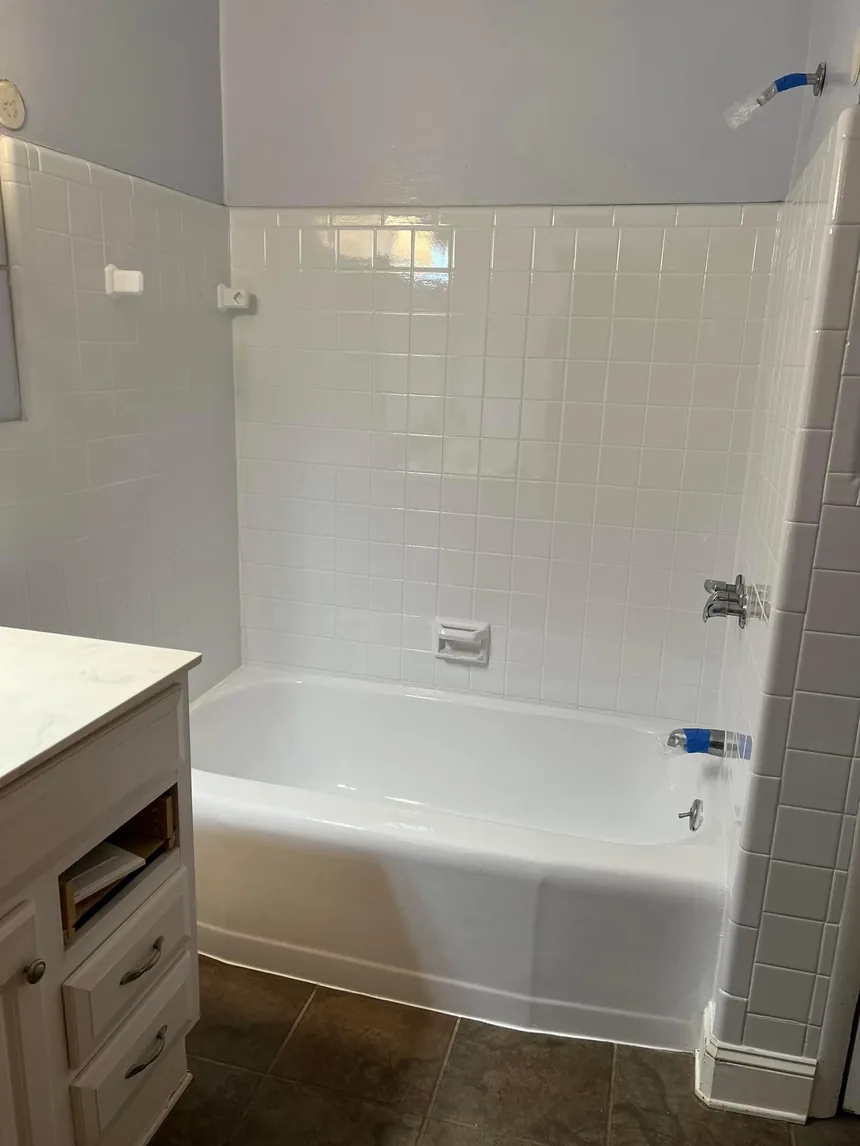
If your tile is sound and you only dislike the color, refinishing the tile changes the color and leaves the wall intact. Nothing gets covered and nothing gets sealed in.
Where liners genuinely make sense
To be fair about it: a liner is a real product with a real use case. If the tub underneath is damaged beyond refinishing — rusted through, cracked, structurally compromised — but you cannot face a full replacement, a liner puts a usable surface in the room where refinishing can't.
The other honest case is a tub with a shape or texture that can't be made good, where you want a different profile rather than a different color.
What a liner is not is the better option for a sound tub with a worn surface, which is the overwhelming majority of tubs. For those, you are paying more to introduce a cavity into your bathroom.
Side by side
- What happens to your tub. Liner: it's entombed. Refinishing: it's repaired.
- Gap or cavity. Liner: always, by design. Refinishing: none — the finish is bonded to the surface.
- If it fails. Liner: cut it out and deal with whatever is underneath. Refinishing: strip and redo.
- Your tile. Liner: usually covered by a surround. Refinishing: stays, or gets refinished too.
- Reversibility. Liner: poor. Refinishing: complete.
- Repairs. Liner: the damage stays underneath. Refinishing: chips and rust are dealt with first.
How to decide in one question
Ask yourself whether the tub underneath is sound. Not pretty — sound. No leaks, no movement underfoot, no rust that's gone all the way through.
If it's sound, the problem is the surface, and the surface is the thing to fix. If it isn't sound, neither a liner nor a refinish is really the answer, and you should be comparing a liner against a proper replacement.
We only do one of these two things, so treat that as the bias it is — but we'll also tell you when refinishing is the wrong call for your tub, which you can read about in reglazing or replacing. Send a photo and you'll get a straight answer.