
Bathtub advice · 9 min read
Reglazing or replacing: how to tell which one you actually need
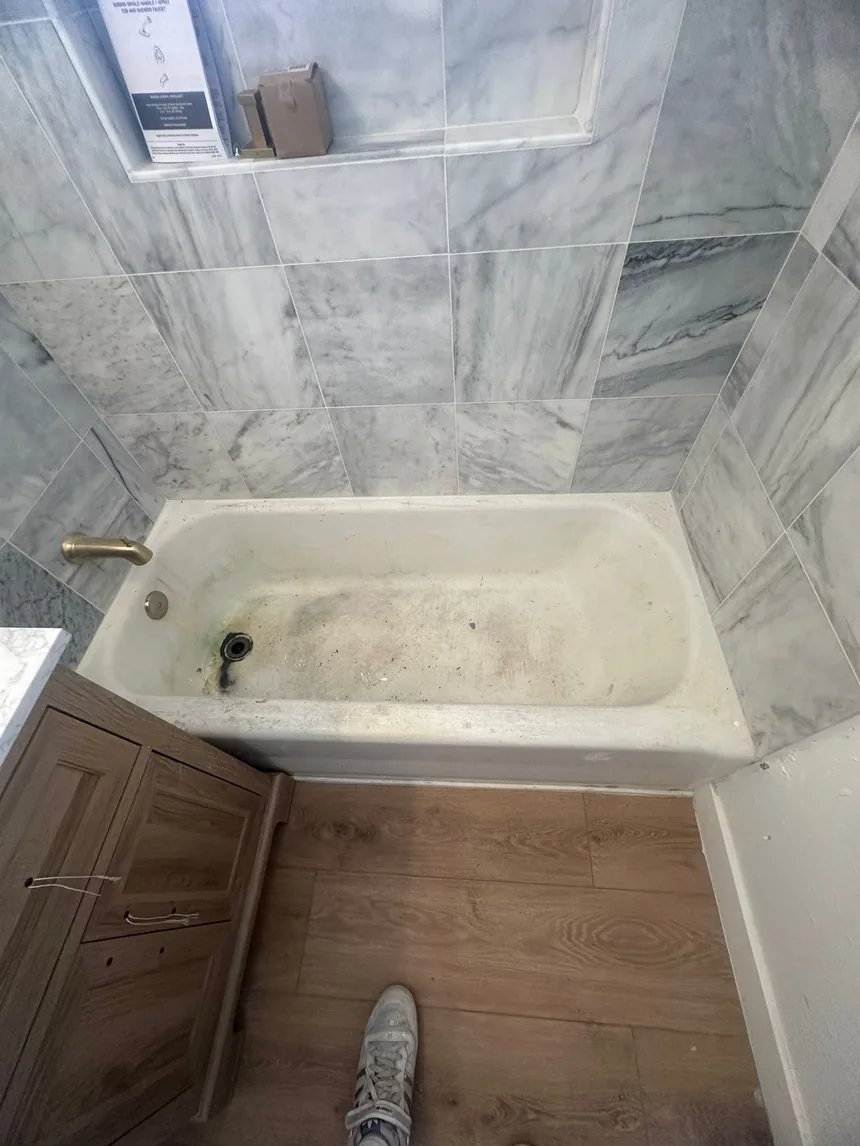 Before
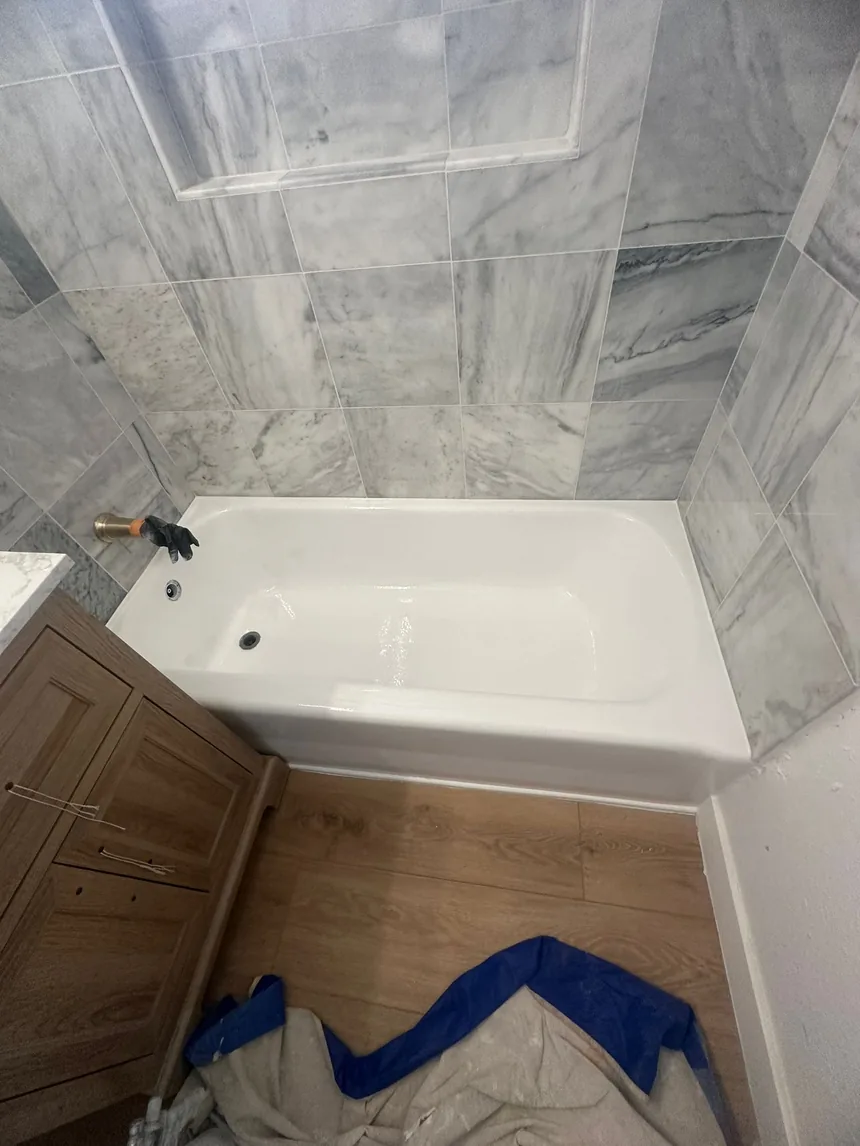 After
After
Almost everyone who calls us has already had the same argument with themselves: is it worth fixing, or should I just get a new one? Here is how to settle it without a contractor standing in your bathroom.
Start with what's actually wrong
Nearly every complaint about a bathtub is a complaint about its surface, not about the tub. Stains that won't come out, a finish gone rough and gray, rust creeping outward from a chip, a color from another decade — all of that is the top layer, and the tub underneath is usually structurally perfect.
That matters because replacing the tub means replacing everything around it as well. Refinishing means replacing the layer that failed.
The four questions that decide it
If you answer yes to any of these, don't refinish it — replace it:
- Is it leaking? A leak is a plumbing problem, and a coating does nothing to it.
- Does it move or flex when you stand in it? An unsupported tub will crack a new finish along with itself.
- Has rust gone right through? If there's a hole, there's nothing left to bond to.
- Are you gutting the bathroom anyway? If the tile and the layout are coming out, put the money there.
If all four are no, refinishing is almost certainly the better answer, and the rest of this is about why.
Which tub you have, and why the bathroom tells you
You rarely need to identify the material yourself, but it helps to know roughly what you're standing in, because it changes what replacement would involve.
In Southern California the age of the house is a decent guide. Bathrooms built before the war usually have cast iron set into a tiled recess — heavy, permanent, and built to outlive the building. Post-war and mid-century tract housing is mostly porcelain enamel over pressed steel: lighter, thinner, and the reason so many tubs from that era have rust creeping out from one chip near the drain. From the late seventies onward you get molded fiberglass and acrylic units, often with the walls and tub in a single piece.
All three refinish. What separates them is how bad an idea it is to take them out. A cast iron tub in a tiled recess frequently has to be broken up in place, and a molded unit is usually wider than the doorway it came through, because it went in before the wall did.
What replacement actually involves
People price a replacement by looking up what a tub costs. That's the smallest number in the job. The tub has to come out, which in most pre-war bathrooms means taking the tiled surround with it, and in a cast iron case may mean cutting it up in place. The plumbing gets disconnected and re-run — and old pipe is where the surprises live. Then there's new tile, new waterproofing, haul-away, and several trades arriving in sequence rather than at once.
The bathroom isn't out of use for the day the tub is swapped. It's out of use for as long as the slowest trade takes to show up.
The tile above the tub decides more than the tub does
This is the part that flips the math for most people, and almost nobody thinks of it first.
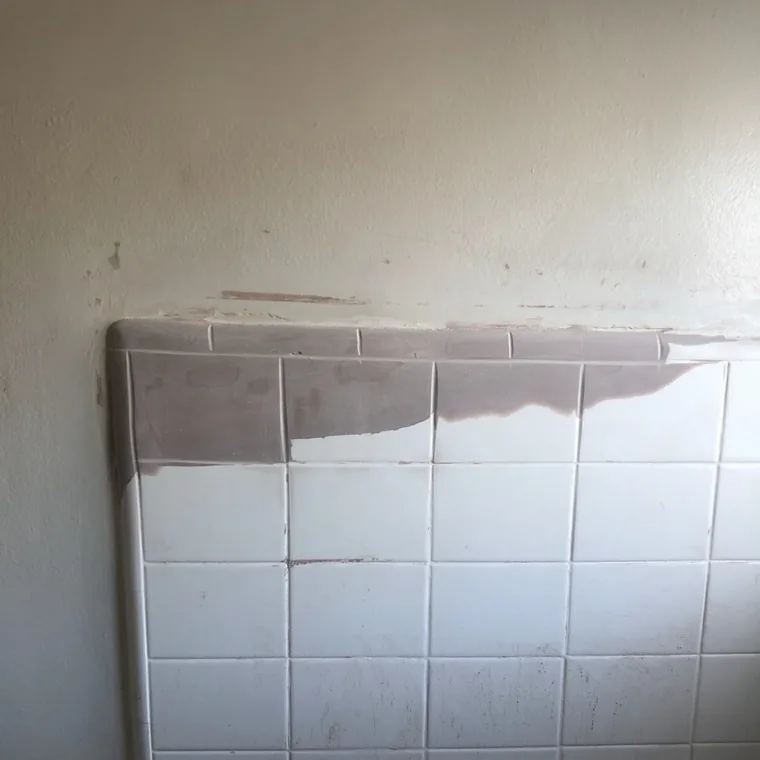
 Before
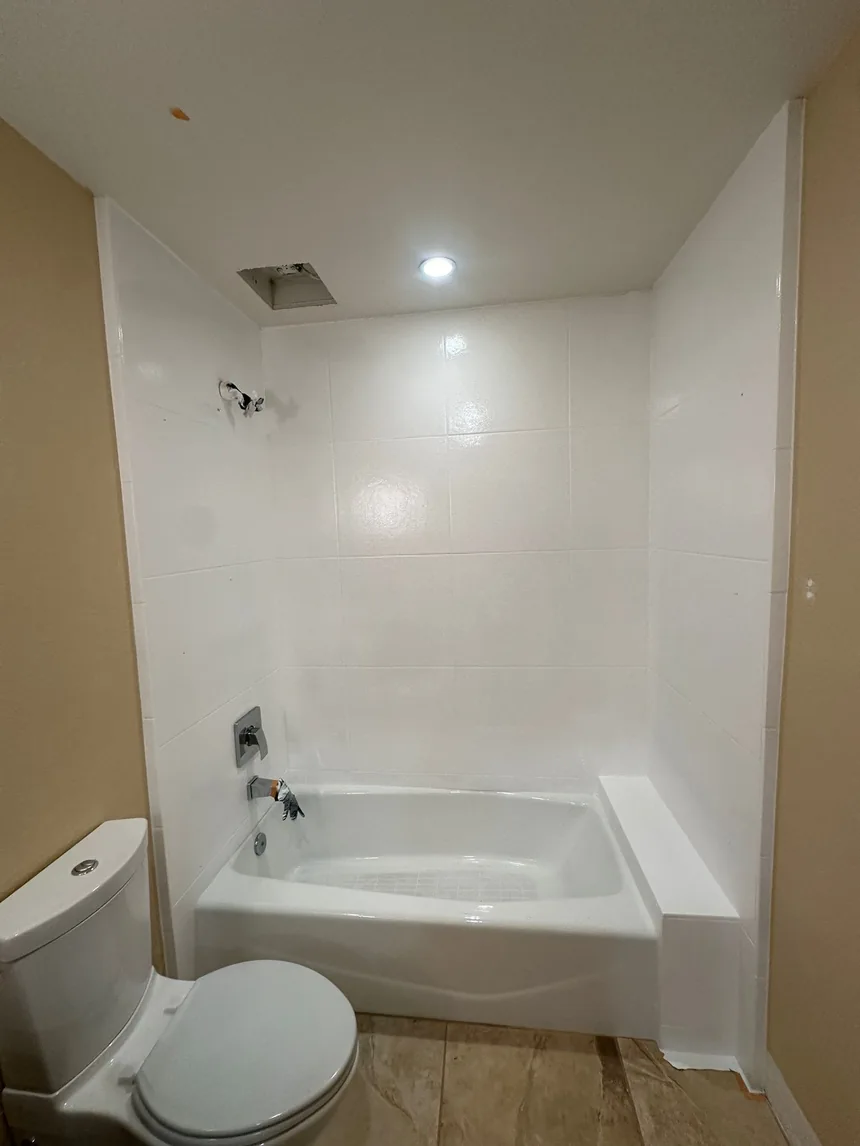 After
After
If the tub comes out, the bottom courses of tile come out with it, and you are not going to match thirty-year-old tile. So a tub replacement quietly becomes a surround replacement, and a surround replacement in a small bathroom is most of a bathroom.
Refinishing leaves that wall alone. And if the tile is the thing you actually dislike — yellowed grout, a color you inherited, a border from another decade — it can be refinished in the same visit, because the room is masked off either way.
What refinishing involves
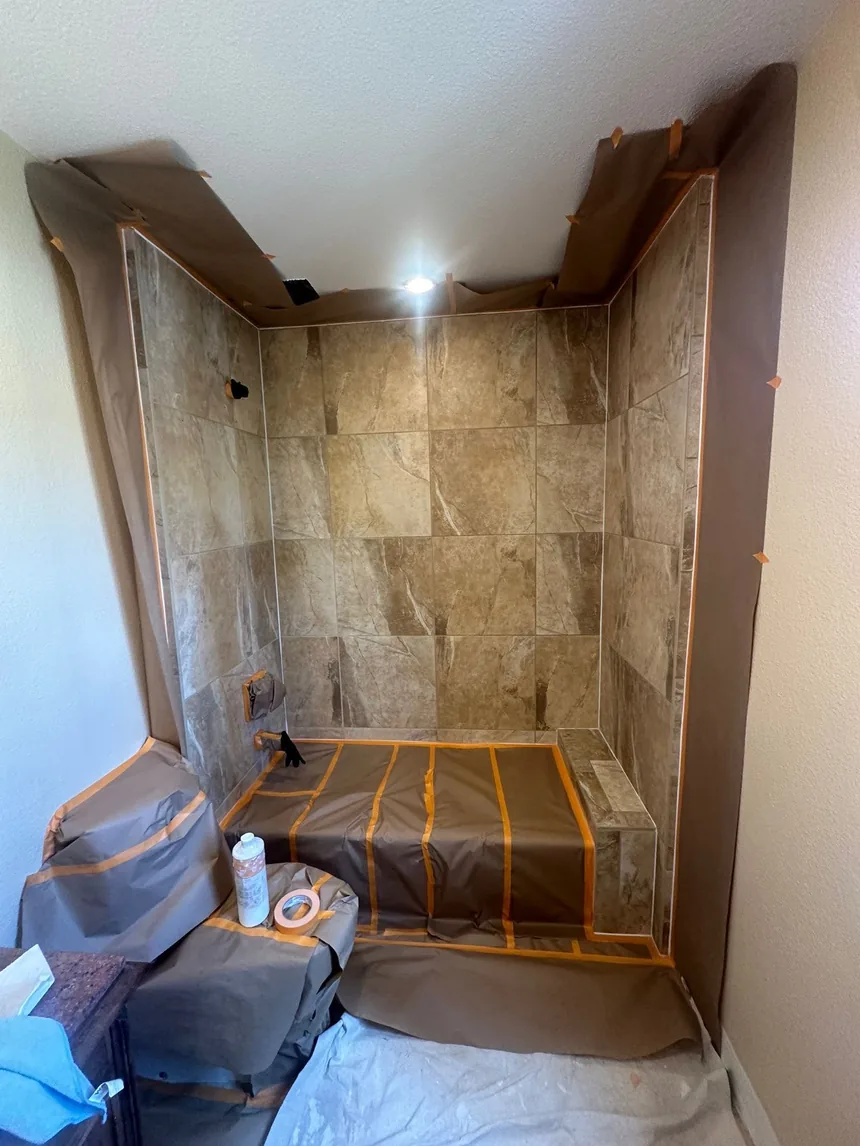
One outfit, in your bathroom, with the tub where it has always been. The room gets masked off, chips and rust get repaired, the surface is cleaned and etched so the new finish bonds rather than sits on top, and several coats go on.
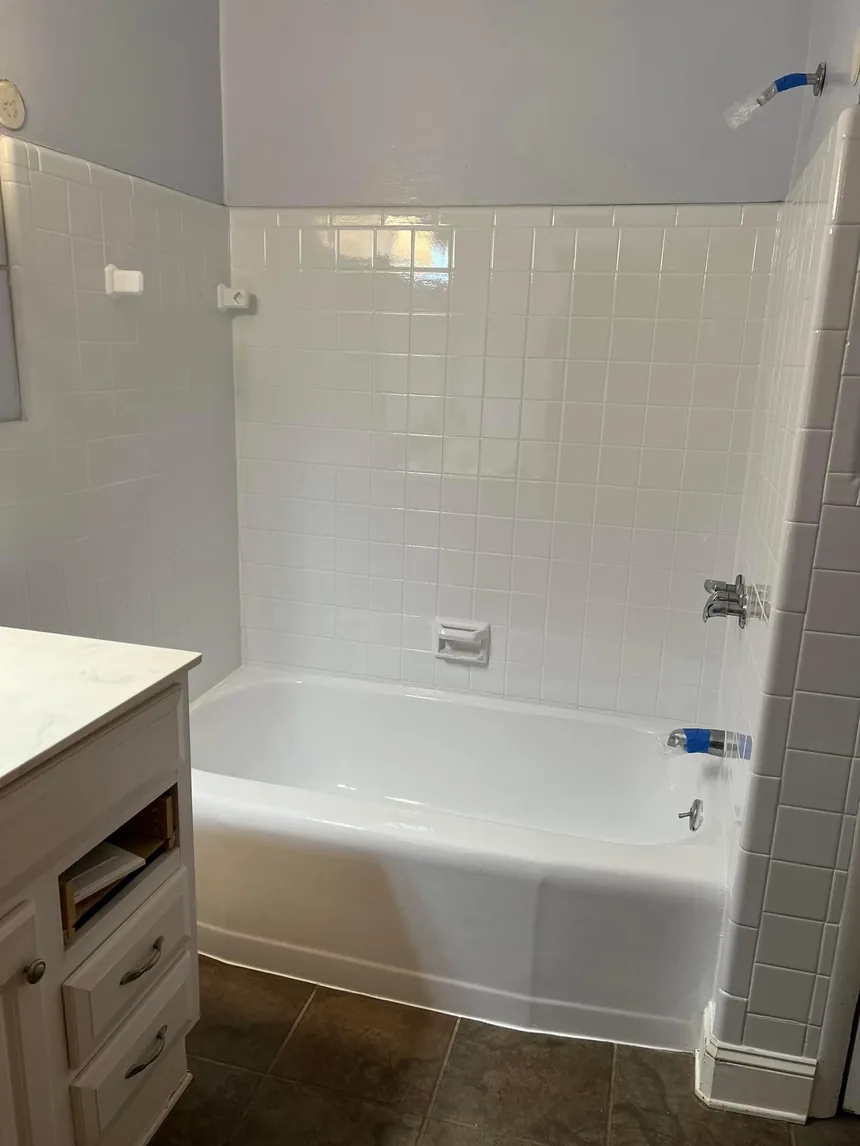
The plumbing is never touched. The tile above it either stays exactly as it is, or gets done in the same visit, because the room is masked off either way.
Color is why a lot of sound tubs get replaced
Plenty of the tubs we're asked about aren't damaged at all. They're almond, or bone, or a soft blue, or the pink that Southern California installed by the acre in the fifties. Nothing is wrong with them except that they date the room the moment you walk in.
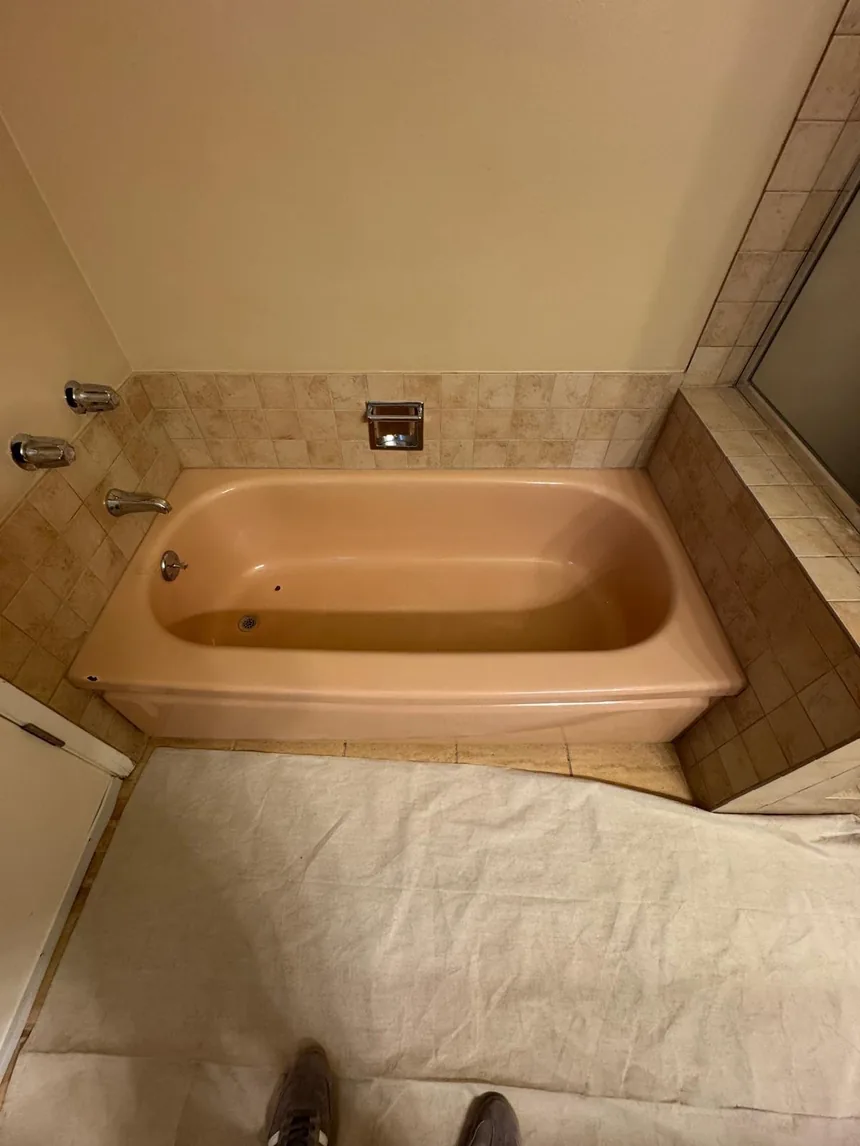
Replacing a working tub to change its color is an expensive way to repaint. Refinishing is the cheap way, and the color is chosen rather than inherited — which also means you can match the tub to a sink and a counter that were never the same shade as each other.
What about a liner?
There is a third option you'll be offered: an acrylic liner, molded to sit inside your existing tub. It is genuinely quick and it is genuinely a different thing from refinishing — there are two surfaces afterward instead of one, with a seam between them and a cavity behind them.
It has its uses and it has a specific failure mode, and both are worth understanding before anyone quotes you for one. We wrote that up separately: liners versus refinishing.
The honest limitation
A refinished tub is a refinished tub. It is not a new tub, and anyone who tells you it is the same thing is selling. What it is: a hard, smooth, non-porous surface in the color you chose, on a tub that was never the problem.
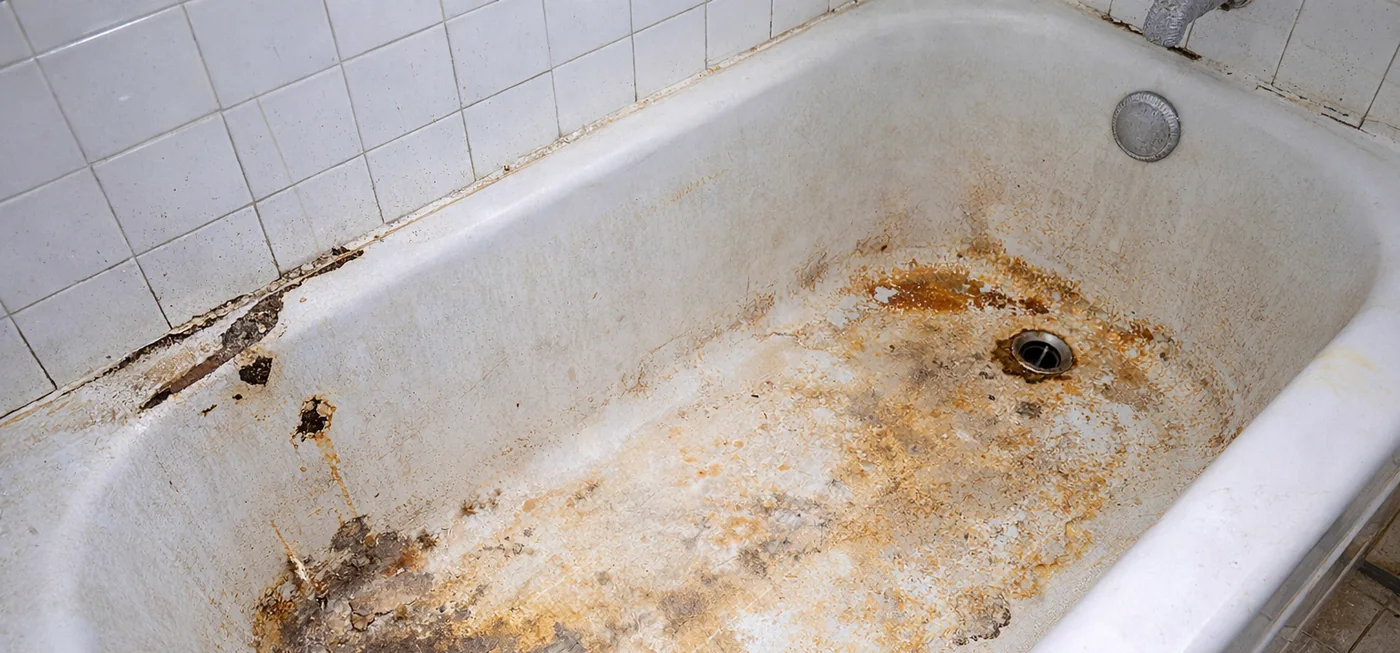
And it can be done badly. A coating sprayed onto a surface that wasn't properly prepared will peel, and you'll see it within a couple of months. That's why preparation takes longer than spraying, and why it's worth asking anyone you call what they do before the gun comes out.
There's a list of the questions worth asking here. The answers sort people out quickly.
If you have decided to replace, check two things first
We would rather you replace a tub that needs replacing than pay us to coat it. If that's where you have landed, two things are worth knowing before the quotes come in.
- Measure the doorway. Not just the bathroom door — the hallway turn as well. Molded tub-and-wall units in particular often went in before the framing was closed up, and a replacement that can't get to the room becomes a different job.
- Find out where the waste sits. If the new tub's drain doesn't land where the old one's did, the floor comes up. That is the single most common reason a tub replacement quote doubles after work starts.
If the answers make you hesitate, that hesitation is the argument for refinishing, and it costs nothing to get both numbers before you decide.