
Kitchens & bathrooms · 6 min read
Is refinishing a tile countertop worth it?
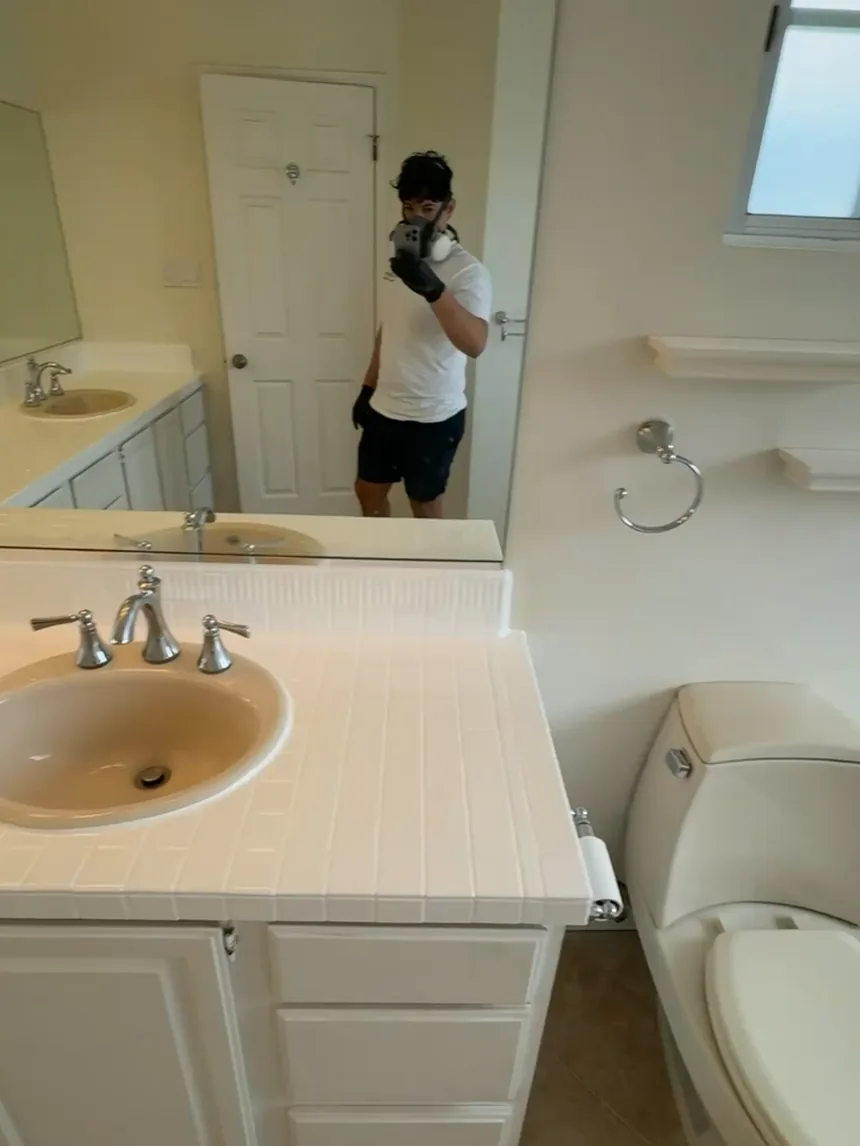
Tile countertops are everywhere in older Southern California houses. Four-inch squares in a kitchen, narrow rectangles on a bathroom vanity, usually with a bullnose edge and a matching backsplash.
They were built to last and they have. They're also the single feature that dates a room fastest — and the reason isn't the tile.
The problem is the grout, and it's structural
Grout is porous. That's not a defect, it's what grout is. On a wall it barely matters. On a horizontal surface where people put down raw chicken, coffee, red wine and make-up, it matters enormously.
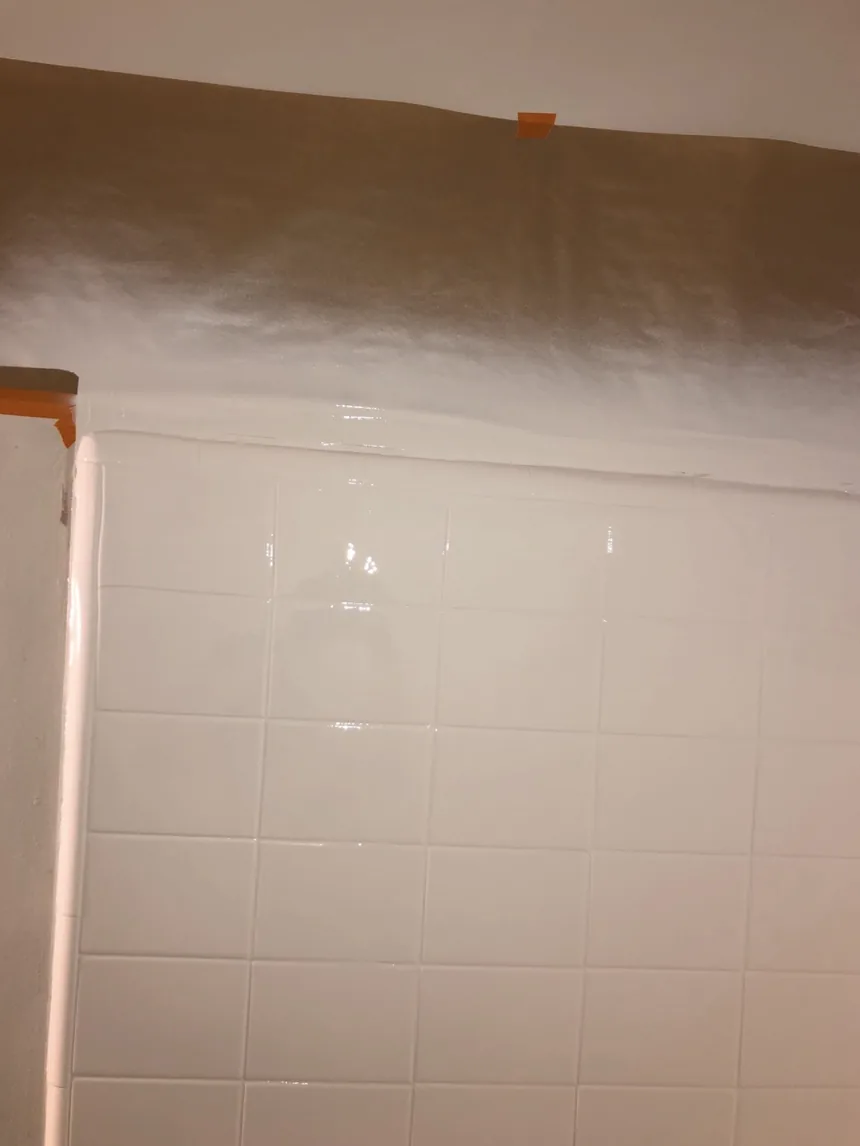
A countertop is the one place in a house where a porous absorbent line runs through the working surface every few inches. Things get spilled on it and left, and the grout takes them in rather than holding them on top.
You aren't failing to clean your grout. You're cleaning the surface of something that absorbed the stain three days ago.
Which is why cleaning works for about a week, sealing works for a few months, and regrouting resets the clock without changing the rules.
What refinishing does differently
Refinishing a tile counter coats the tile and the grout together, as one continuous surface.
There is then no absorbent line left in the countertop. Spills sit on top and wipe off, because there's nowhere for them to go. For a countertop specifically, that's a bigger practical change than the color is.
Be clear about what you'll see, though: the tile grid is still visible. The lines are physically in the surface. They're just the same color and finish as everything around them.
The sink, and the thing people don't expect
On a bathroom vanity, the drop-in sink gets done at the same time and in the same color. So does the backsplash.
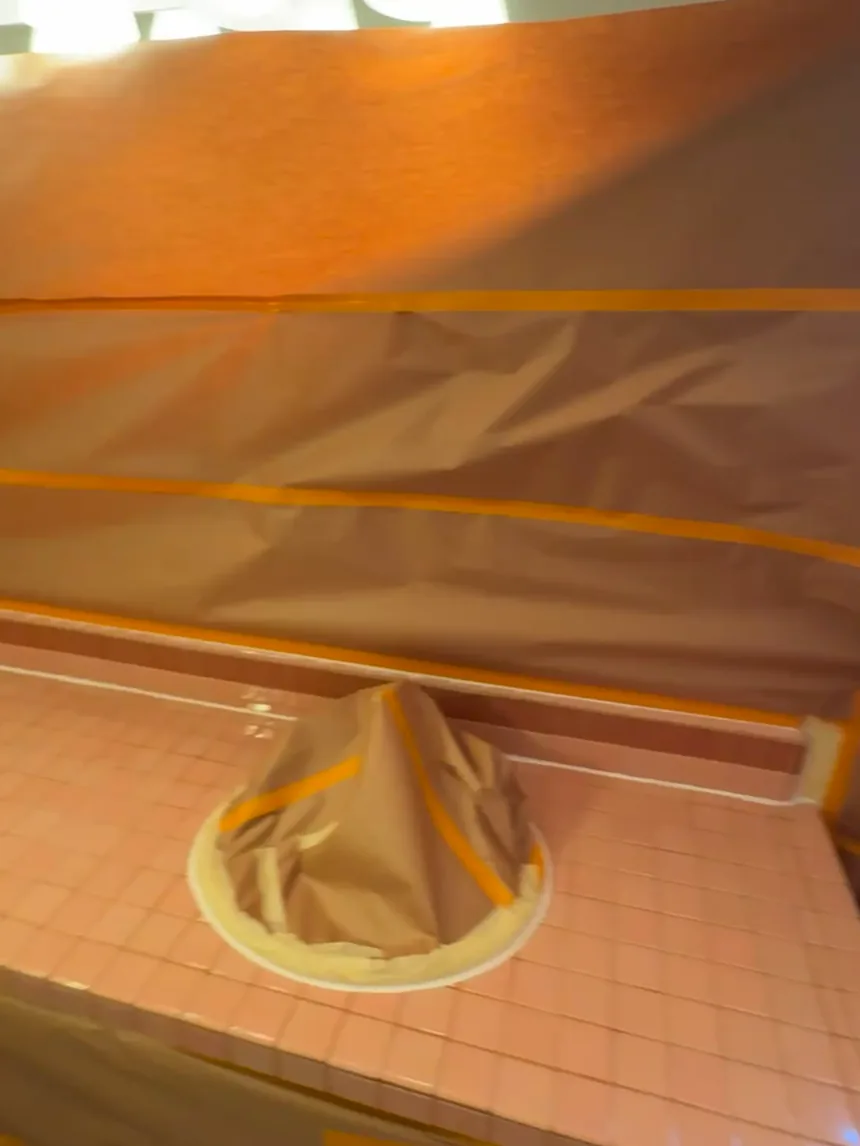
The detail that surprises people is that the faucet doesn't come off. Faucets, handles and drains get masked and stay exactly where they are. That's the difference between a surface job and a replacement: nothing gets disconnected, so nothing can go wrong with reconnecting it.
Anyone who has tried to swap a drop-in sink knows why that matters. You pull the faucet, cut the seal, get the old one out, and discover the new one doesn't match the cutout.
When it's worth it, plainly
It's worth it when:
- The tile is sound — nothing loose, nothing moving, the substrate solid.
- The grout is the thing driving you mad.
- The color dates the room.
- You want it to match a tub or sink you're already having done.
- The counter is attached to a vanity or cabinets you're keeping.
When it isn't
- The counter flexes. If the substrate moves, a coating cracks along with it.
- Tiles are loose or lifting. They get re-set first, or the finish fails at the joint.
- There's water damage underneath, usually around the sink cutout. That's a repair before it's a finish.
- You want it to look like stone. A refinished surface is a solid even color. It doesn't imitate granite or marble veining, and anyone who tells you otherwise is overselling.
- The cabinets are going anyway. The top goes with them. Put the money in the new one.
The argument that actually decides it
Most of what you pay for on a small job is not the surface. It's getting to you, masking the room, protecting the floor and the fixtures, ventilating, and packing it all down again. A vanity top on its own carries that entire overhead by itself, and that's why a standalone counter job is poor value.
Added to a bathroom where the tub or the tile is already being done, it carries almost none of it. The room is masked off either way.
So the honest answer to "is it worth it" is: on its own, it depends. Alongside something else in the same room, almost always.
If you're calling about a tub and the counter has also been annoying you, mention it on the same call — not after we've finished and gone.
Afterward
Non-abrasive cleaner, soft cloth, and use a chopping board rather than the counter. Don't leave standing water sitting on it for days. The same rules as a refinished tub, which are in the care guide.