
Mid-century bathrooms · 7 min read
What to do with a pink, green or blue 1950s bathroom
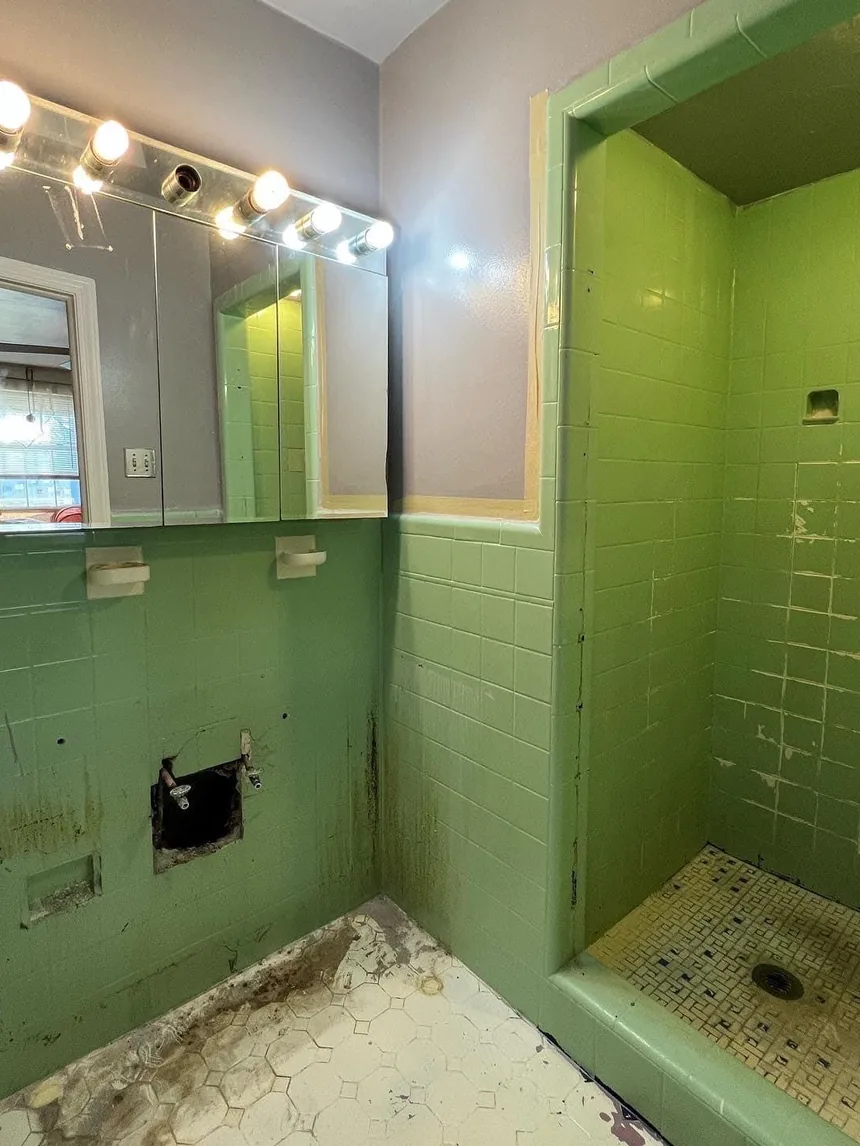 Before
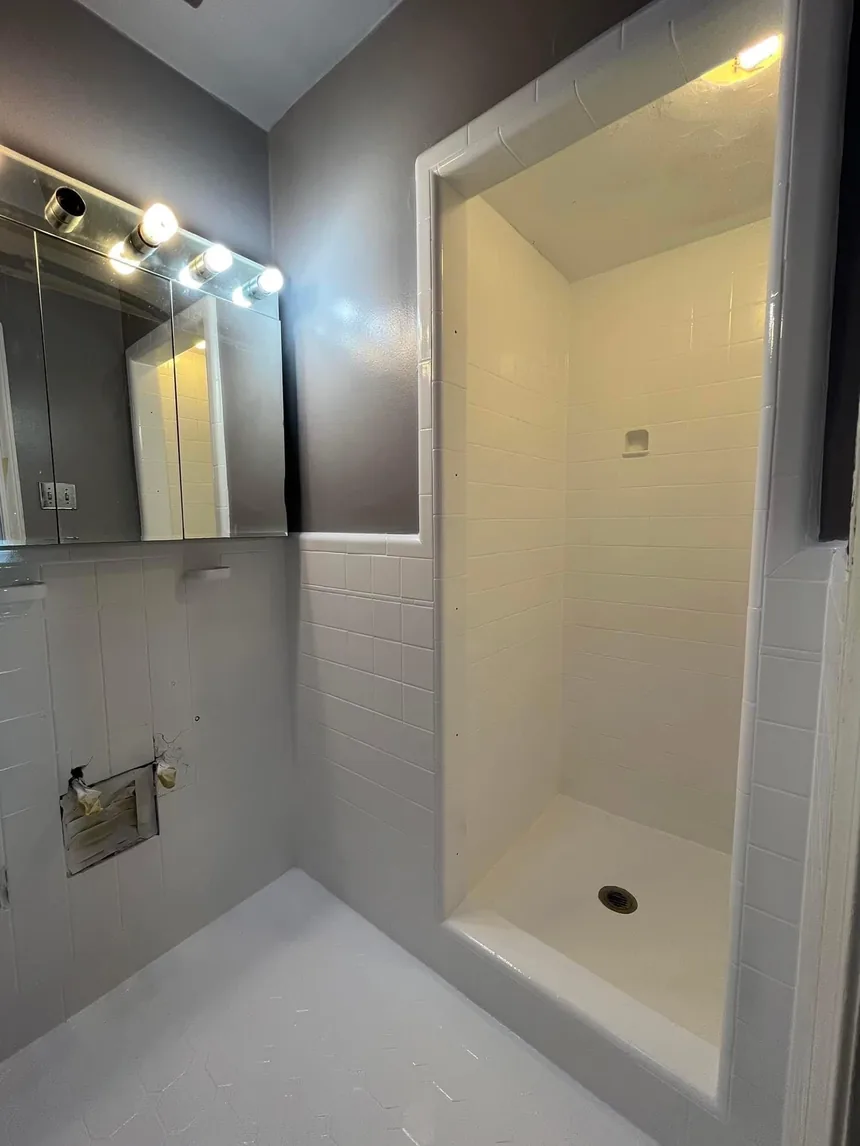 After
After
Pink tile. Mint green. Powder blue. Yellow. Sometimes two of them in the same room, with a black border.
If you've just bought a mid-century house in Downey, Lakewood or Torrance, or inherited one anywhere in Los Angeles, you've met this bathroom. It's in remarkably good condition. It's also unmistakably sixty years old.
First: is it actually in bad shape, or is it just the color?
Worth separating, because people conflate the two and end up spending a remodel budget on a color problem.
Mid-century American bathroom tile was made properly. Thick glazed ceramic, set in a full mortar bed rather than stuck to a board. It's frequently in better structural condition than tile installed in the nineties.
So ask yourself honestly:
- Is any tile loose or hollow-sounding when you press or tap it?
- Is the wall behind it soft anywhere, especially around the tub or shower?
- Is there mold that keeps coming back in the same spot after cleaning?
- Is the layout wrong for how you live?
If it's all no, then nothing is wrong with your bathroom. You just don't like the color, and that's a much smaller problem than the one you thought you had.
Option one: keep it, and lean into it
This deserves saying, because the market has shifted and a lot of people rip these out and then regret it.
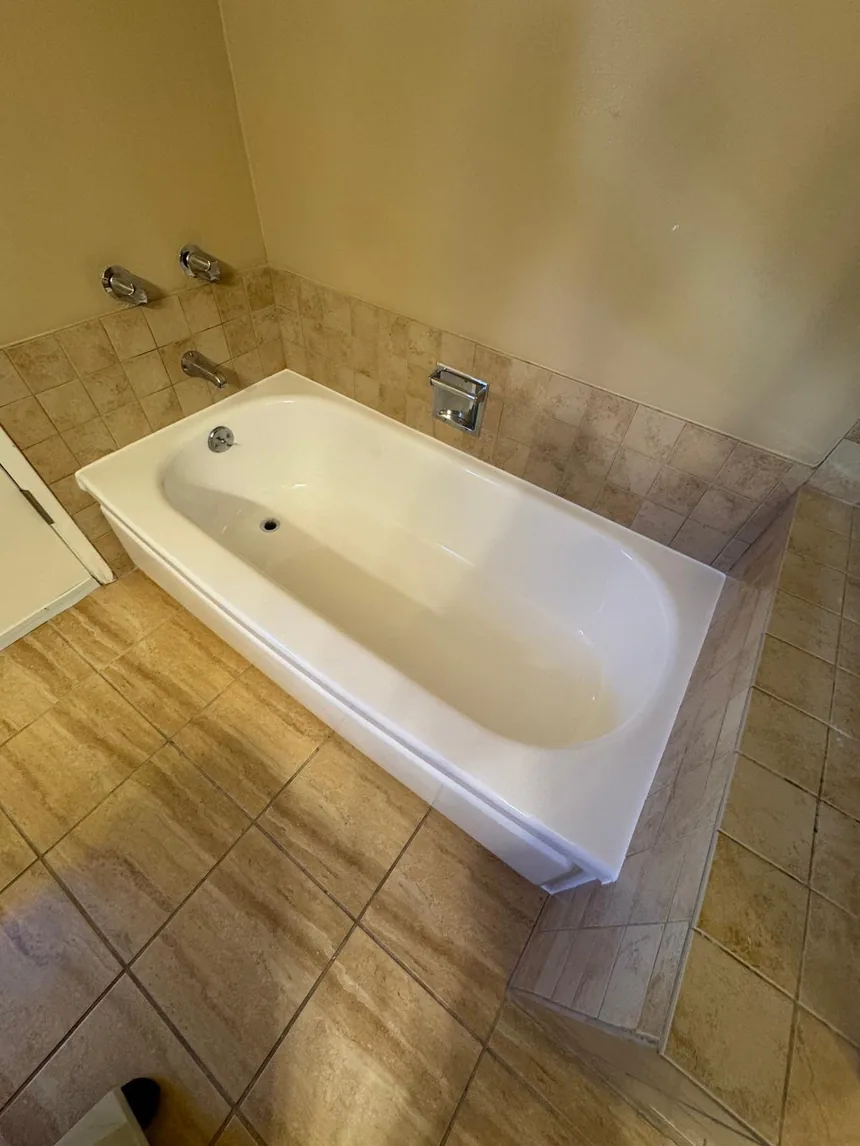
Original mid-century bathrooms in good condition are increasingly seen as a feature rather than a defect, particularly in period houses in Pasadena and the older parts of Burbank. An intact 1954 pink bathroom is now a thing people photograph. A 2014 gray one is a thing people replace.
If you keep it, the work is usually cosmetic: regrout, replace fixtures, re-caulk, deal with the lighting, and get the ventilation sorted out. The color stops looking dated the moment the room stops looking neglected.
Option two: change the color without removing the tile
This is the middle option that most people don't know exists, and it's the one we do.
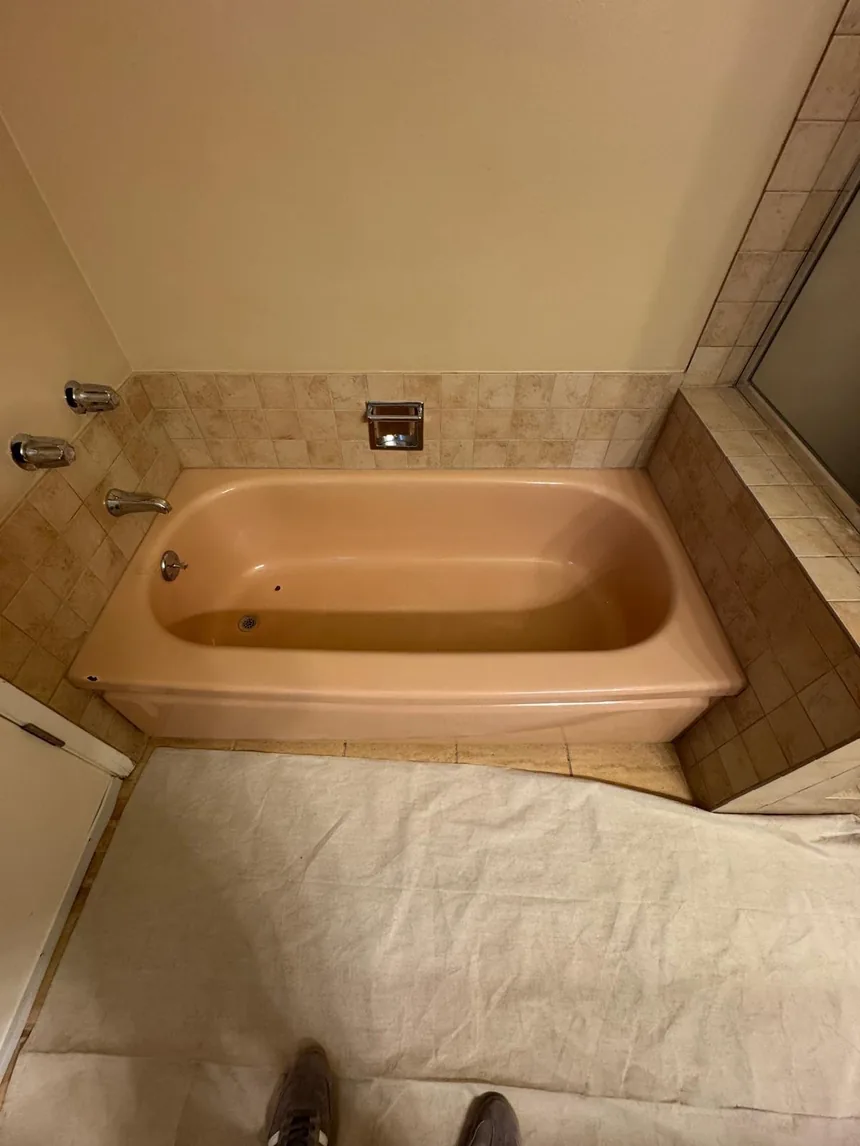
Refinishing tile coats the tile and the grout as a single surface. The tile stays on the wall. The wall stays closed. The color changes.
Two things worth being precise about, because there's a lot of loose marketing around this:
- You will still see the tile grid. The lines are physically in the wall — they don't disappear. What changes is that they're the same color and finish as the tile, so they stop reading as the dirty part.
- It's a solid color, not a pattern. Refinishing won't give you the look of marble or stone. It gives you an even, uniform surface in the color you choose.
The tub and the sink can go the same color in the same visit, which is usually the point — a pink tub in a newly white room is worse than a pink tub in a pink room.
Option three: the full remodel
Sometimes it is genuinely the answer. If the layout is wrong, if the plumbing needs doing anyway, if the wall behind the tile is compromised, or if you're doing the whole house — take it out.
Just go in knowing what it is. Removing tile set in a mortar bed is not the same as prying off modern tile: it often comes away with the wall surface behind it, and in a 1950s house that can turn into a larger job than the quote described. Plus dust through the house, a skip on the drive, and several trades in sequence.
The color advice nobody gives
If you do change it, resist going to the brightest available white by reflex.
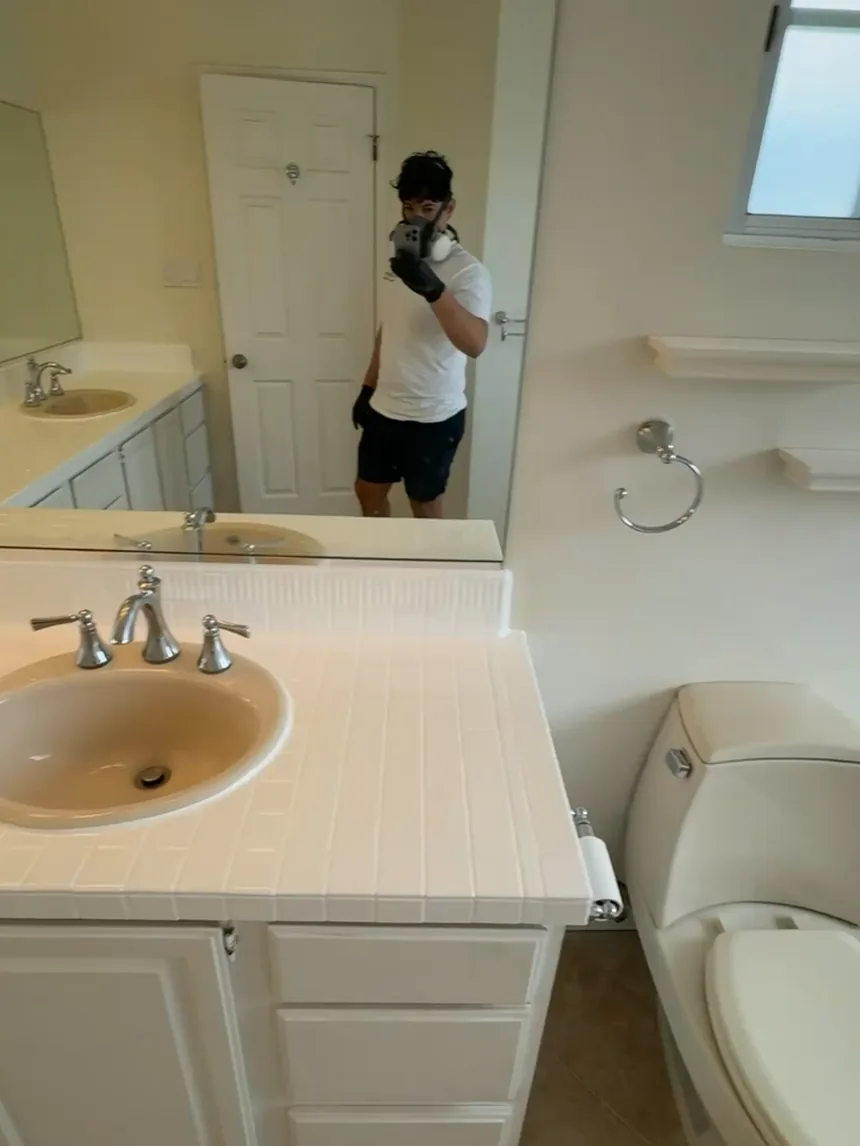
Old bathrooms have aged into softer tones — the ceiling, the window frame, the floor. A brilliant modern white next to all of that reads as new and slightly cold, and it emphasises everything you didn't change.
Bone and soft off-whites almost always sit better in a mid-century room. Gray works when the fixtures are modern. And matching to something already in the room — the floor tile, a window, a fixture you're keeping — is a normal request.
The one thing to fix regardless
Ventilation. A lot of these bathrooms were built with a small window and no extractor, and in a house where four people now shower daily instead of one bathing weekly, that's why the grout keeps going dark and the mold keeps returning.
If you refinish a wall without fixing the ventilation, you'll have a cleaner-looking room with the same underlying problem. That's worth taking care of whichever of the three options you pick.
Not sure which camp your bathroom falls into? Send a photo. We'll tell you honestly whether it's a color problem or a real one — and if it's a real one, we'll say so rather than quote for coating over it.